Categories
Travelogue USA

USA Part 14 – Up in the air

Along the way, you come across boards that have a number – these were mile markers (mileposts) that mentioned which mile of the highway you were on. We were on Parks Highway at mile 95. Mile 99 is where we took a diversion to Talkeetna, our destination city. The road is called the Talkeetna Spur Road – again we had mile numbers on this road. Mile 14 is where the air taxi providers operate from.

As per my research, there are some pullout points from mile 9 to mile 13 onwards where, if lucky, you could spot Mt. Denali – this is the tallest mountain in North America. We didn’t spot the pullovers, but then neither did we stop to investigate, since we wanted to get to the Talkeetna Air Taxi place first. They say that not everyone who comes to Alaska gets to see Mt. Denali, since the peak is often obscured due to the weather. Today was a sunny day, but there were fluffy white clouds around, not clear skies.

Mile 14 is where you had the air taxi services. We arrived at the place with a board that read ‘Talkeetna Air Taxi,’ the operator we had signed up with. There are a couple of others as well, all offering similar packages. 
So the first thing they do is a check-in where they verify our booking and then take our weight.
The lady at the counter said, “Don’t worry, I won’t announce your weights.”
At least in our group, no one really would have cared if she did. 
“Do put on everything that you’d be carrying with you on the flight.”
Raghav left his jacket in the car since it was pretty sunny. But she advised him to bring one, and he got it from the car.
“It’s about 40 minutes in the air and then 15 minutes on the glacier.” She provided a brief description of what we’d experience, including the weather and temperature today. 
“You should be good with a jacket on the glacier.”
We were given a yellow card and told to proceed outside, where we could get our snowshoes. The card indicates which group you are in, the flight route you are taking, and whether your trip had a glacier landing.
“Don’t wait till your group is called to use the restroom. That’ll delay the flight. Make use of the restroom now itself while you wait.”

Beyond this check-in point was the tarmac; we could see a number of small flights, but first we had to get our snowshoes. There was a lady manning the stall, which had a selection in different sizes. Each of us got one; she showed us how to put it on, and we were all set – a sort of slip-on that you wear above your sneakers. I had heard of pollen allergies being common in the US – for the first time, I saw loads of the yellow specks floating in the air, almost like a thick cover of dust floating around! 
We noticed that the flights stationed on the tarmac had wheels, but they also had glides beside the wheels. 

It was time, and the young captain called our group around 1 pm – checked our card colours and took us close to our aeroplane.
“Do you all have mobile phones?”
So tuned we were that instinctively people started pulling out their phones to switch it to airplane mode, but he said, “Don’t worry – I won’t ask you to turn it off; it doesn’t bother my instruments!”
He gave a quick overview.
“Every seat has a headset. It’s a one-way communication – so you can hear what I say, but I won’t hear you through that. That would make it hard for me to focus on other communications going on while we fly.”
You obviously want window-side seats for this trip. “All seats are window side,” he announced.
“Who wants to get in first?”
Since seating didn’t matter, I just hung around to be the last one in.
“Good for you, you have the last seat, which has the maximum leg room,” he said, as I climbed up the short ladder. 
He got in after me and shut the door. There was a row of single-seaters on both sides of the flight; 12 passengers could sit, along with the captain and assistant, in the cockpit. 


Once in, he tested the headsets to check that all of us could hear. There is also a volume control knob on it.
“We’ll wait for a gap to take off.”
Flights were landing and taking off periodically, and as we waited, we could see one take off just before us. We were soon in the air and crossing the Talkeetna River. 
The captain gave a running commentary as we flew past areas.
“Talkeetna is a place where 3 rivers meet – Talkeetna river, Susitna river and the Chulitna.”
If you trace the Talkeetna River on the map, it flows into the Susitna, which runs all the way down the state into the Cook Inlet, which connects to the Gulf of Alaska, a part of the Pacific Ocean.
We crossed the water bodies, plains and swamps. 
The captain explained about Dall sheep, which were important for Alaskan natives. 
Some folks may find the view gets a little monotonous because from the height we were in, the flat terrain seems to look the same – you are just seeing water, sand and some greenery way below. Rakesh dozed off in a few minutes!

The captain announced our elevation as he steered the flight upwards. I woke up Rakesh as we headed into the mountain range.
“At 12000 feet and beyond is when an oxygen mask is required.”
There is the highest flight package that takes you around the peak of Denali, where it was mentioned that oxygen masks will be provided.
“The glaciers are at 4000 to 5000 feet above sea level. The mountains you see near are around 5000 feet higher. And then there is Denali, whose peak is at 20000 feet. No landing is possible there, but 17000 feet is where the highest possible landing was done. On a clear day, you can view the peak from the glaciers.”

We sort of got close to a height of 12,000 feet; Alaska has 17 of the 20 highest peaks in the USA! 
There were a few glaciers that the captain pointed out. He’d tilt the flight towards one side so that the passengers on that side would have a good view and promise that on the return leg he’d tilt the other way to give the passengers on the other side the same view. The captain also called out a couple of mountains – one was Mt. Hunter, whose peak was at 14000 feet.
We entered a gorge that the captain said is the Great Gorge of Ruth Glacier.
“Either side of the gorge are granite cliffs, and we’ll be landing on the glacier.”
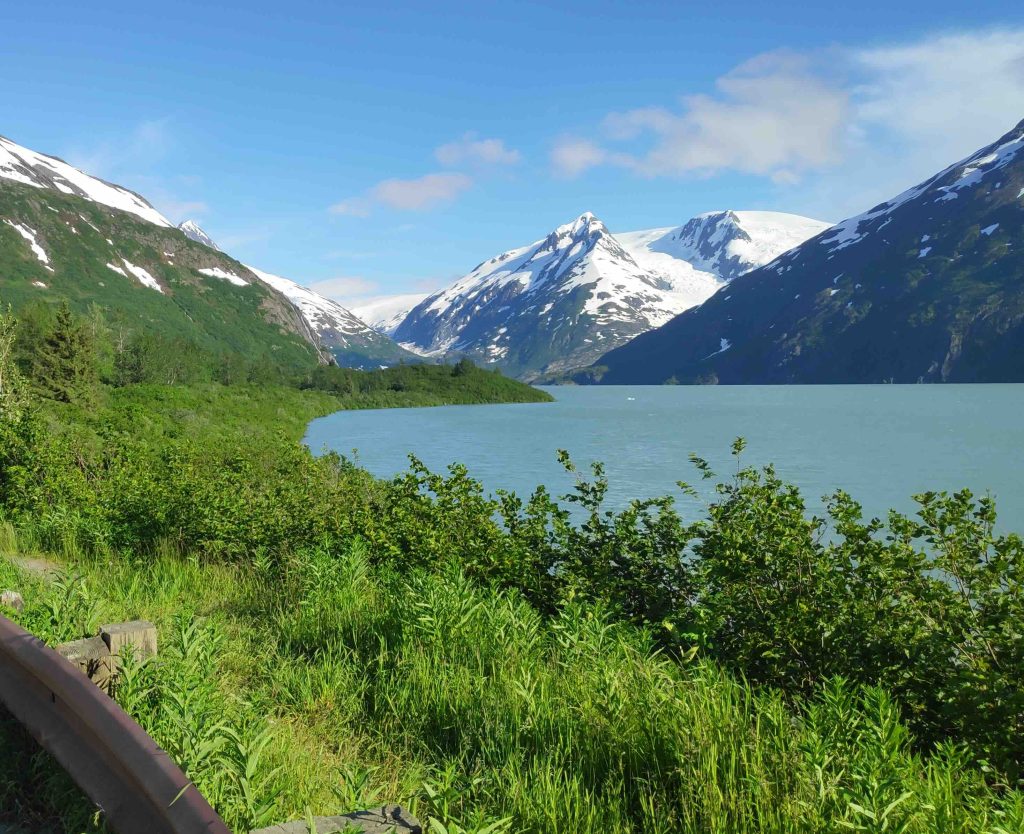
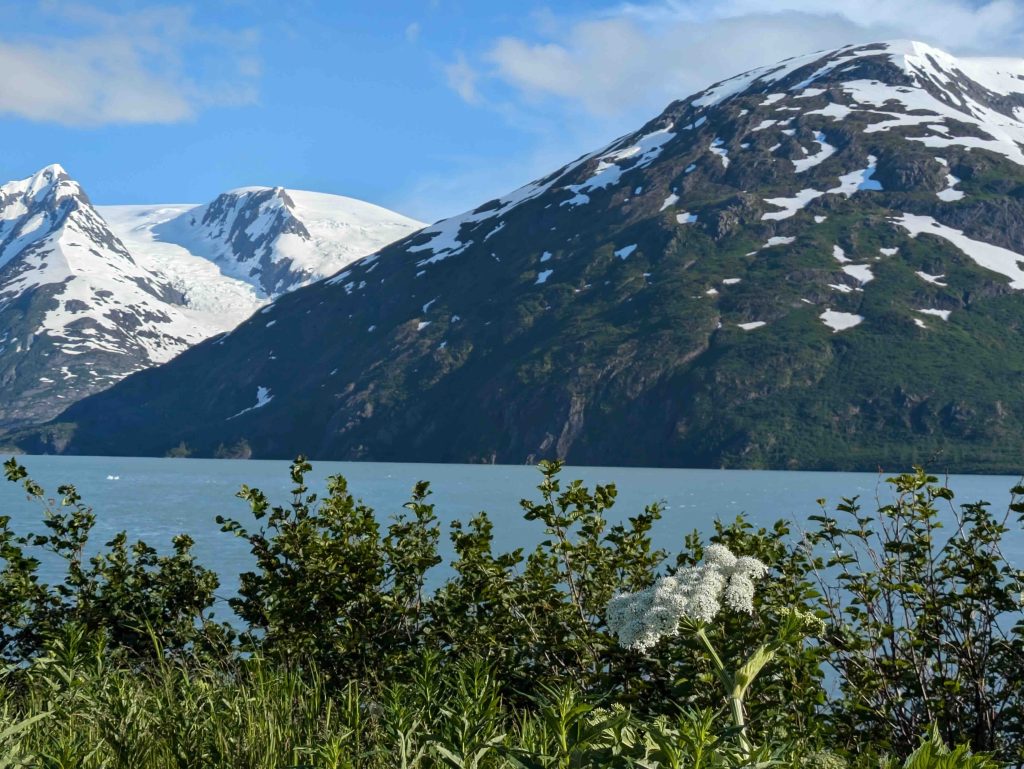
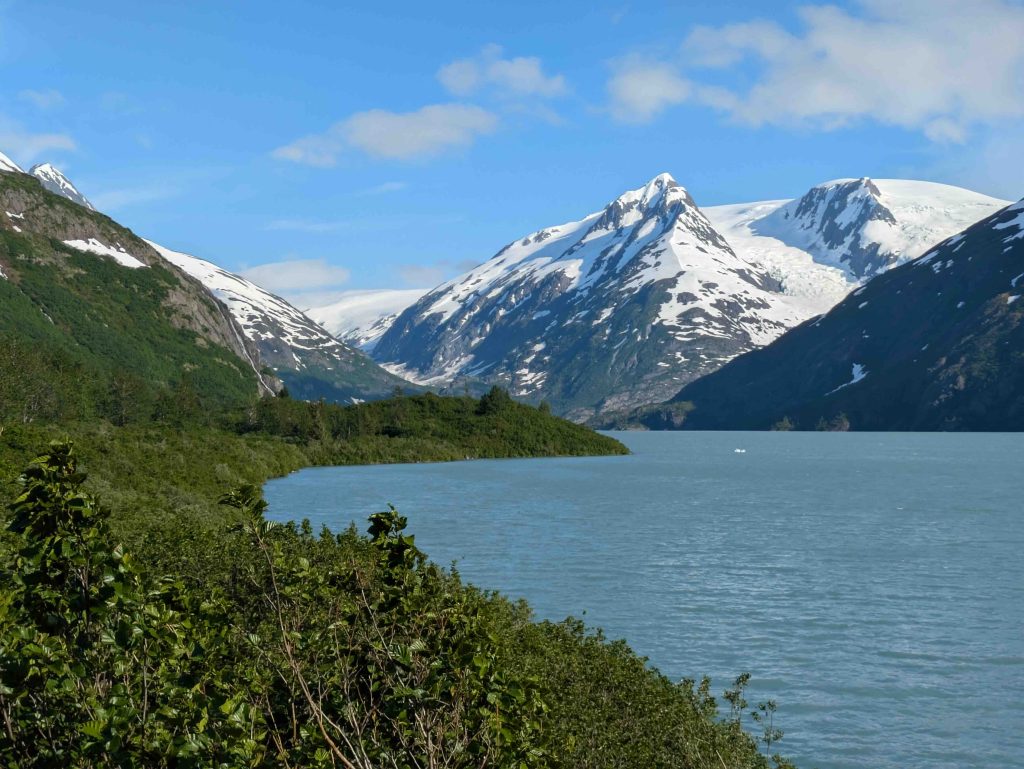
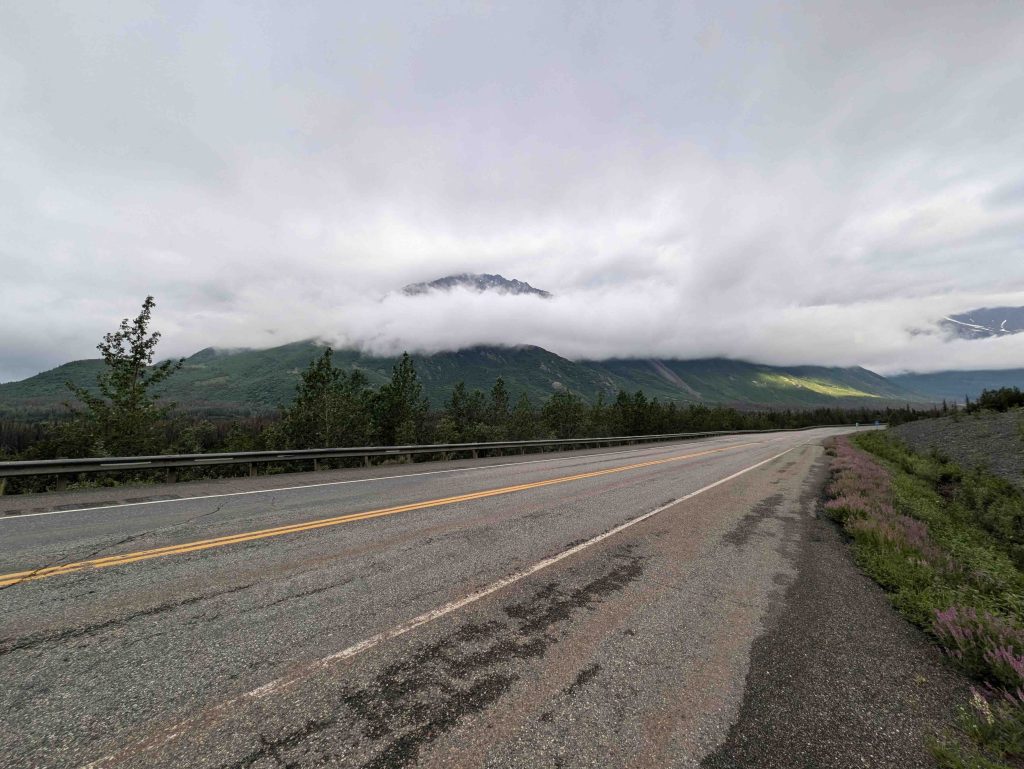
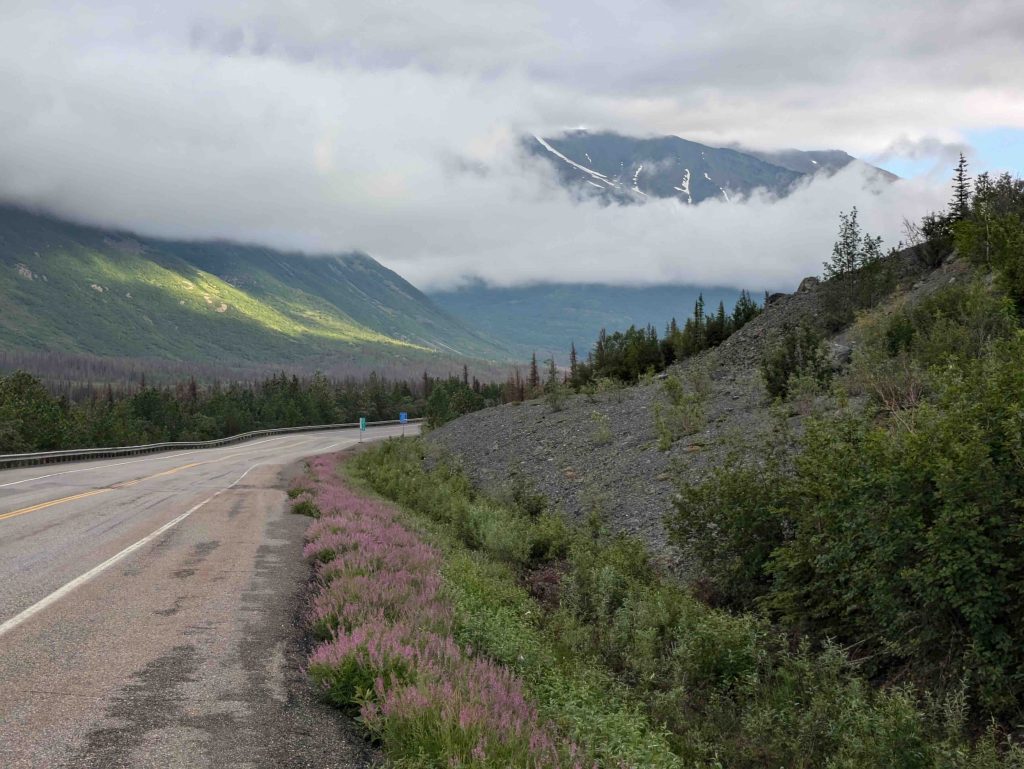
It was an impressive sight – we were in the clouds, with a blue sky, looking down at the steep, brown, rugged walls, which were interspersed with plenty of white snow. 

Categories
Travelogue USA

USA Part 13 – Coffee to get going

Before heading back home, I had one more place on my list to check out, and since it was close by, we drove over to Ship Creek Overlook. We found a place to park the car and saw a few folks fishing in the waters – they were literally standing in the middle of the stream on some rocks and fishing; there was even a family that seemed to be enjoying their outing – the father relaxing on a chair they had brought along with them, son standing next to him, a couple of kids running on the road. It was almost midnight, but there was still daylight! I had picked this place because it was supposed to be a point for salmon runs. Right now, we couldn’t see any fish, but just above the water, there were plenty of birds (seagulls) swooping low to the water and then taking off – they did this repeatedly – seemed like they were hoping to pick some fish from the water. The salmon run is a migration event in which salmon move from one location to another. And if you happen to be in the right place at the right time, you will see hundreds of salmon swimming in the water. This is also a bountiful time for predators of salmon – easy to catch them in bulk.

As per my rudimentary research, we were very early in the season for salmon runs – another month or so later is the optimal time. We enjoyed the midnight setting with the background noise of water, as well as the whooshing sound of birds flying around. As we stood on a boardwalk looking at the seagulls, a random stranger who seemed a little suspicious asked us, “Do you have seagulls in India?” and walked away. Your body is in a state of heightened alertness at this hour when outside, and random strangers who seem to move or behave awkwardly make you feel uneasy. 

Sunset was said to be at 11:44 pm, but even at 12:30 am, there was still daylight – not bright and sunny, but more like the early morning daylight. In our neighbouring home, the kids were still playing in their backyard – obviously making the best use of the extended day!
Moorthy tried to stream the World Cup cricket highlights on TV, and I gave him company for a while, but sleep was hitting me – I jumped into the bottom bunk bed and dozed off almost immediately.

Sunday

The plan was that if we were up early in the morning, we’d hit Beluga point again for Moorthy to test his old professional camera. And coincidentally, both of us were up by 5 am. The other two were sound asleep, and we tiptoed out of the house to be welcomed by bright daylight. 
We revisited Potter Marsh and Beluga Point.
“The mist is better today.”
“It has cleared a bit, but it’s still there.”
“Yeah. Maybe this time of the year, it’s usually there.” There was this odd haziness around which you may faintly notice in the pictures – a mystery whose answer we would discover later.

A video that gives you a sense of the highway

Moorthy took a lot of shots with different settings, and we drove further down the Old Seward Highway – the scenic road is quite a lovely long stretch, but we decided to turn back since we would anyway do this route later in our trip. There were numerous clouds that added to the scenic beauty of the landscape (click images to expand)

In search of breakfast, we landed at around 7:30 am in the same strip mall where the Indian restaurant Taste of India was located. There was a joint called Heidi’s – it was an American joint that was surprisingly fairly large. And there were already people having breakfast – a good sign, since we had come here based solely on Google reviews. The breakfast menu was typical of what you’d find (pancakes, waffles, omelettes, benedicts, etc.), but they did have a fair amount of variations in terms of meat. They even had omelette with Reindeer meat; this is something common in many Alaskan restaurants. We ordered a few items for takeaway and headed back home.

Our Airbnb place had plenty of utensils for cooking and serving a feast, including a microwave, dishwasher, and fridge. The food we brought was good, especially the omelettes, which had ample veggie stuffing. Only the French toast was disappointing because it was overcooked and slightly burnt in some areas. 
“You guys brought a lot of food,” Raghav commented.
“For all of us.”
“But I don’t have breakfast.”


We had forgotten that when ordering – but the one thing he needs, though, is coffee. He tried to make coffee using the coffee maker in the house, along with some packets of coffee and milk powder that he found in the drawers. But he didn’t like what he came up with. 
We ate all the food, including Raghav, and Rakesh ensured that we disposed of all the garbage in the big bin on the lawn before heading out.
“There’s not much cleaning they have to do now; we’ve already cleaned the place.”
“Can’t ask for a reduction in the cleaning fee.”
The cleaning fee charged in the Airbnbs when doing the bookings were pretty high. The property’s daily rate without it may appear low, but once you factor that in, it significantly hikes up the average daily rate.

The drive to Talkeetna is about 2.5 hours; we started around 9:30 am. Raghav kept searching Google Maps for a coffee shop on the way, and he found one called Jitters. It turned out to be quite a find – their tagline is “Where Coffee is an Art!” 


Thankfully, they had 4 sizes of coffee cups – the smallest was 8 oz (nearly 250 ml); I’m not a coffee lover, and so didn’t pick anything – instead, I got an empty cup and mixed a little from what Raghav and Rakesh bought. What’s unique here is that they have a bunch of syrups that you can ask them to add to your drink – and they have a lot of choices in this. They have a very lively setup. Even their cup has a nice colourful image of their logo. Whatever those two added as toppings gave the coffee a nice taste – even I liked the coffee, and the coffee connoisseur in our group was also very appreciative of it. A good cafe that’s about a 30-minute drive north of Anchorage.

Categories
Travelogue USA

USA Part 12 – A marshland

Potter Marsh features a lengthy boardwalk that provides several viewing points, allowing for a closer look at the marsh. It’s sort of an odd location – the highway is just beside the marsh. There were a few other people on the boardwalk, and we stopped at many points to see if we could spot wildlife. This place is known for it, but we only spotted a few birds – this still is a lovely walkway; there’s a stream running under the boardwalk, and after a point, it is just the sounds of nature that you hear. Lot of great spots for taking snaps here. The history of this wetland dates back to 1917, when it was accidentally created during the construction of the Alaskan railroad.

Right at the end of the boardwalk was a small rectangular area for resting. An old man was seated on the left, and beside him was a stand with binoculars set up for viewing – presumably was his.
He commented, “Take a look through it. You can see a bald eagle watching its little ones on the tree.”

There were a lot of trees at a distance, and yes, we could spot it – the eagle was sitting on a branch of a tree at the top; the man said it was the mom; it looked around once in a while, but otherwise, perfectly still. Without the binoculars, I couldn’t see it even though I knew the approximate area where it was supposed to be.
“How did you spot it?” I asked him.
“It’s hard now. But it was easy to spot when the place was barren a few months ago. I saw it then and so knew where it was.”
We chit-chatted with the man for a while till another group came along with kids. He was a volunteer and spent a lot of time in Potter Marsh. “There was a bear we saw a few days earlier in the morning.”
“Oh,” sounded exciting.

This definitely was a place you could come to daily to spend time watching nature go about its business. 

As we returned to the boardwalk, we noticed a diversion – it seemed like an exit, but no one else was taking it. There was a board that talked about bears and moose in Alaska’s backyards. Most of Alaska, the board said, is moose country, and these moose are huge – can be as tall as 7 feet and weigh 1600 pounds! The board warned us about danger signs to look out for if you spot a moose – lowered head, stomping hooves, clicking teeth and licking lips, the board said might mean the moose is going to charge. Yield to the moose – it weighs half a ton!
It was an interesting place to have positioned this educational board – just as we were stepping off the boardwalk into what looked like a forest area with no idea what was ahead of us!
“Maybe there’ll be a bear here?”
Fortunately, there wasn’t – and the forest stretch ended quickly – it was just a short distance, like a mini-trail in a forest that took us to the back side of the parking lot. 

Our next stop was a little further down the same highway – the Beluga Point. Belugas are a type of small whale – and this point was named so because Belugas do frequent the place, but this wasn’t the month for them. You’ll find that on the Alaskan highways, there are viewpoints set up so that folks can park their vehicles, enjoy the view, and not disturb the traffic. The railway line was just beside the parking spot fence, and some people had hopped across the fence and past the railway line to step on the rocky mass protruding into the water. There were two large rocky bodies – the first one was easily accessible, but the second one wasn’t.
“The only way seems like is to go into the water and enter through that small path over there.”
Except for the 2 people who were already there, no one else was attempting to get there. 
The view was spectacular; we spent some time clicking snaps. 

Beluga Point

“There is some mist on the mountains in the distance – can’t get a clear shot,” Moorthy said. He was testing out his old professional camera that he brought along on the trip – think of the ones where you carry separate lens attachments.
“Maybe it’s the time of the day.”
“We should come early in the morning,” he said and continued changing the settings to see what gave him a better shot. We strolled further down to touch the waters.

Skipping!

“It is cold.” Sunny above but cold in the water.
Rakesh started throwing small pebbles on the water (in a sidearm action) to try to get them to bounce off the water’s surface. I later learnt that this is called ‘skipping stones’ or ‘stone skipping or skimming’. There are even stone-skipping competitions! Very soon, the other two got into a contest with Rakesh to test who could make the stone skip multiple times before it sank into the water. We spent 30 minutes in the area before moving along.

It was 9 pm, but the city was soaked in daylight – it just didn’t feel like the night! Seeing the time, we knew we’d have to find a restaurant soon – we always left the restaurant selection to Rakesh and Raghav since they picked good ones – they found a Mexican one called Tequila 61 in downtown Anchorage, gave us the chance to check out downtown as well. 

It was 10 pm when we started dinner with daylight around! We had nachos (which were on the house and quite yummy), fish tacos, a veggie fajita (that you could assemble by adding the ingredients), and a lime-based dessert. The food and ambience were good; before leaving, I went to the restroom, and even the restroom had a unique design, with the walls decorated with plenty of pennies.

At 11 pm, we were back on the street, and daylight was still around; most shops had closed except one. The board seemed to indicate it was a small grocery shop. While the guys stepped into the car, I called out, “Hey, let’s just see what’s there in the shop and go.”
Raghav joined me. There weren’t many people in the area, but there were a couple of old men stumbling along whom we bypassed and avoided making eye contact with, though it sounded like one of them was muttering something. Not knowing what state they were in and considering the time of day, we did feel a little uneasy, but then, since there was still daylight, we felt okay venturing around.

As soon as we stepped into the shop, we knew this wasn’t your usual grocery store – this seemed like a cigarette shop, more specifically, a vape (e-cigarette) shop – plenty of flavours and products here.

Categories
Travelogue USA

USA Part 11 – What’s tomorrow’s plan?

Next stop was our Airbnb home in a residential neighborhood; there was no caretaker or human to deal with – we had the code to open the electronic lock, and that was it. The place was clean and spacious – a cosy 3-bedroom independent home. It had everything you’d need even for an extended stay – from a fridge, microwave, a decent television and even a washing machine in the bathroom. The only drawback we could call out was that there was just one bathroom. One bedroom had a bunk bed as well. There was also a backyard, which we had access to, where there was a small hut or, you could say, a large kennel.
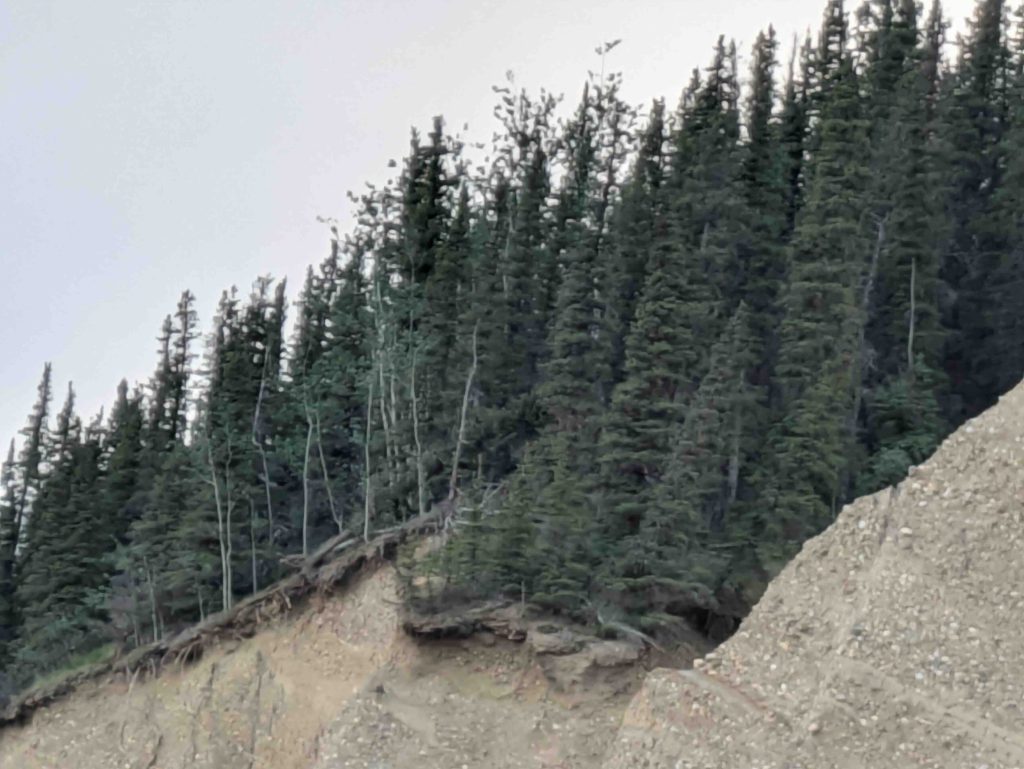
“Maybe that’s home for a bear?”
It sure could accommodate a bear.
One of the benefits of going as a group and renting Airbnb’s is that you get spacious places, and the cost per person turns out to be lower than what you’d pay in hotels. 

It was late in the evening, and we surely had to plan something by now for tomorrow. There were a couple of things that stood out from my rudimentary research – Denali National Park and flight-seeing tours. Raghav narrowed down choices for the flight tour while I was digging for info on Denali. 

The plan

Our rough itinerary was to drive tomorrow from Anchorage to Talkeetna (a 2-hour drive) and then, later in the day, continue northwards to Denali (a 3-hour drive). Talkeetna was a city where a couple of operators conducted flight tours – each of them had a range of options that differed in terms of the flight path and duration of the flight – the longer it is, the more expensive, and they all have one route that goes around the summit of Mt. Denali (the tallest mountain in North America); since this one goes to about 20,000 feet, it will be the only one where they’d say you should be in good physical condition and will need to use oxygen masks. All these flights offer the option to add a glacier landing, which costs an extra $130 per person. Basic research did say that the glacier landing is a must-add. So that was finalized – Raghav picked the Talkeetna Air Taxi operator and looked at availability for 4 folks for the morning or afternoon. Some packages (routes) didn’t have seats but we did still have a few options. The group consensus was to choose a basic tour with the add-on of a glacier landing. Raghav booked the tickets, and since the glacier landing happens on a glacier inside the Denali National Park, you are required to buy a pass to the park (which is valid for a few days). He made all the bookings online.

From my research, I found there was a bus tour of Denali National Park – but on their website, the bookings were available from Wednesday onwards; but for Monday and Tuesday it showed there were no seats available. 
“Is it in so much demand that all are booked out?”
“But it shows the next 2 days as being available.”
And so Moorthy called the Denali National Park to confirm.
“There should be tickets available for sure. Let me check,” the attendant said. “That’s strange. I’m getting a system error.”
He asked us to call the Denali bus depot. Moorthy called and enquired about the Tundra Wilderness Tour. 
“Are there tickets available?”
“I don’t know; there may or may not be.”
“What are the timings of the tour?”
“They are random.”
“By when do we have to buy the tickets?”
“You have to come in person to buy the tickets,” the guy responded. 
That was one of the weirdest customer service calls!  
“Haha, probably he was an intern – I don’t know how things work; buses go randomly whenever they want to and wherever they want to!”

“So we should book our stay tomorrow around Denali.”
Rakesh conducted the research while Raghav skimmed through the booklets we collected at the airport. After discussing options, they booked accommodation in a place called Cantwell – this city was a 30-minute drive from the Denali National Park visitor centre.

This was turning into a trip where everything was decided at the last minute. We only knew where we’d stay the next day and had no plan for anything beyond that! With Sunday planning done, we stepped out to cover some spots that I had marked as part of the plan for Anchorage. But before that, we headed to the Walmart super center, which was 10 minutes away, to get some supplies for the trip. 
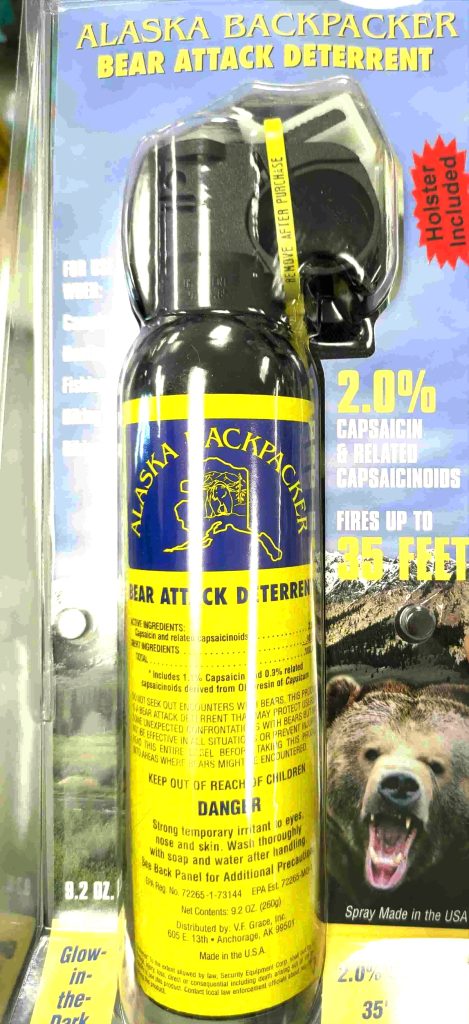
The item I was most interested in was the bear spray. The staff said it would be in the sporting goods section, but it wasn’t there. 
“Costco will have stock. We’ll get it in 2 days,” the staff said.
There was a Costco nearby, but the closing time as per Google was 6 pm on weekends, and it was unlikely we’d make it.

The drive

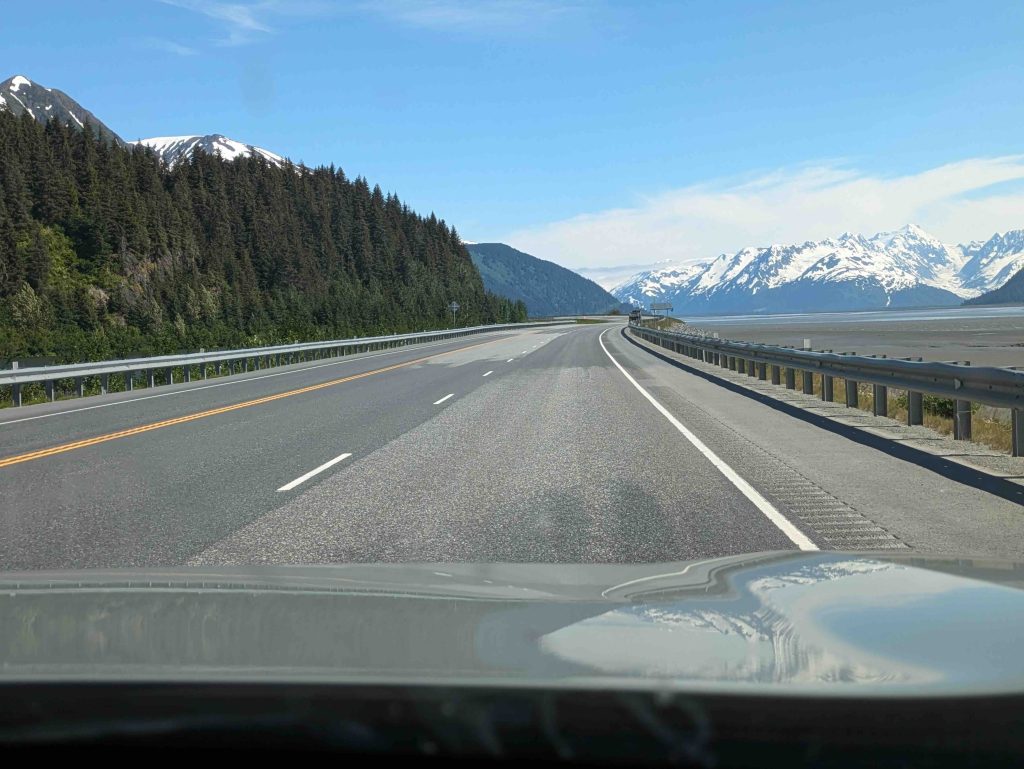
Our first real destination, as per the plan, was Potter Marsh – to get there, we drove on Highway 1, which is also called the Seward Highway. As we neared the destination, we saw a large water body on our right – this is an inlet of the Pacific Ocean that extends all the way to Anchorage. Beyond the still waters were mountains, with some of them having a sprinkling of snow on top. Between the highway and the water inlet was the Alaskan railway track. To the left of the highway was greenery and smaller mountains (part of the Chugach State Park). This is a highway that you should definitely drive down if you get a chance – with all of nature’s colours surrounding it. 

An alternative way to experience this is to take the train. It was an option I’d considered – taking the train from Anchorage to Denali on the train, but then, the problem would be for the return; we’d have to do the train again, and we’d lose the flexibility we had with a car.

Our destination for now was Potter’s Marsh, and so we stuck to the plan without getting diverted by the scenic Seward Highway! 

Categories
Travelogue USA

USA Part 10 – Know ur cards

While Moorthy walked to the National Car rental counter, Rakesh got a phone call. And Raghav and I were busy collecting brochures and pamphlets about Alaska stacked in little bookshelves. We picked a copy of everything – it would come in handy for planning!

Choice?

Moorthy felt the prices being quoted were higher than what Rakesh and he had seen the previous night online. The guy at the counter said, “Check online to see if it shows a better price. The prices fluctuate.”
After a while, we discovered that the online rates had also gone up. 
“Can we check at the other counter?” we asked, looking at the 3 other rental company outlets nearby. 
“Oh, we are all together.”
So this was an interesting setup – these were 4 different rental companies, but they had some sort of tie-up, or perhaps they were all owned by the same entity! Gives you an illusion of choice.


There were a couple of other rental counters on the other side of the escalator, but Rakesh said that he was seeing the price of those show higher online. So we stayed at the same counter.
“Who is the primary driver?” the staff asked.
We went with Rakesh.
“You’d have to add whoever else will drive the car as a secondary.”
We opted for Moorthy – there is an extra charge for adding more folks as drivers. 
“Would you like to add insurance?”
Our initial thought was that it wasn’t required.
“Is basic insurance part of the rental?”
“No – there’s nothing. You have to add-on.” And then he showed a list of add-ons – every add-on was extra money. 
The staff mentioned, “Some credit cards also provide insurance. So you can check that.”
Rakesh said, “Mine doesn’t.”
“Just check the offers on your card. Many have some level of coverage.”
His was a basic Bank of America card, and he tried searching online to find what was covered. The staff also started searching to help us out. 
“Yeah, this doesn’t have.”
And then Moorthy pulled out his card – he had a premium United one in hand while he had left a few others at home, one of which he was sure had insurance coverage. And so began the search online to see what services were provided as part of his card. He also mentioned that he had a Costco visa anywhere card, and when the staff heard that, he said, “Oh, you have Costco. Then you should book it online from Costco, and you’ll get offers.”


Costco is a large retailer in the US where you need to be a member to make purchases – and all purchases are made in large quantities; think of them like a wholesale shop that sells to retail customers – so if you are buying toothpaste, you can’t buy a single piece and instead will have to buy a pack of 6 tubes. Many people would go there once a month to stock up on supplies. 
“But I don’t know if it has coverage.”
“I have a Costco, and it has.” But the card the staff flashed was different from the one Moorthy had; we tried searching online again for the services included in this one.
“You should know all the services offered in your cards,” the staff said. “Costco will have insurance. In fact, you’ll also get to add a 2nd driver for free if you book from Costco.”


And so, Moorthy tried to book from the Costco site using guidance from the staff since he didn’t know that you could make rental bookings via Costco and get offers.
Finally, the booking went through, and the staff said he got the online order. And it did include some freebies, thanks to Costco. 
“It’s worth spending time knowing your card.”
Definitely some homework for Rakesh and Moorthy!
In India, I know a few folks who use various cards for the sake of getting discounts on purchases or hotel or airline bookings. But many of us don’t spend the time to look at what all is offered. 

The maze

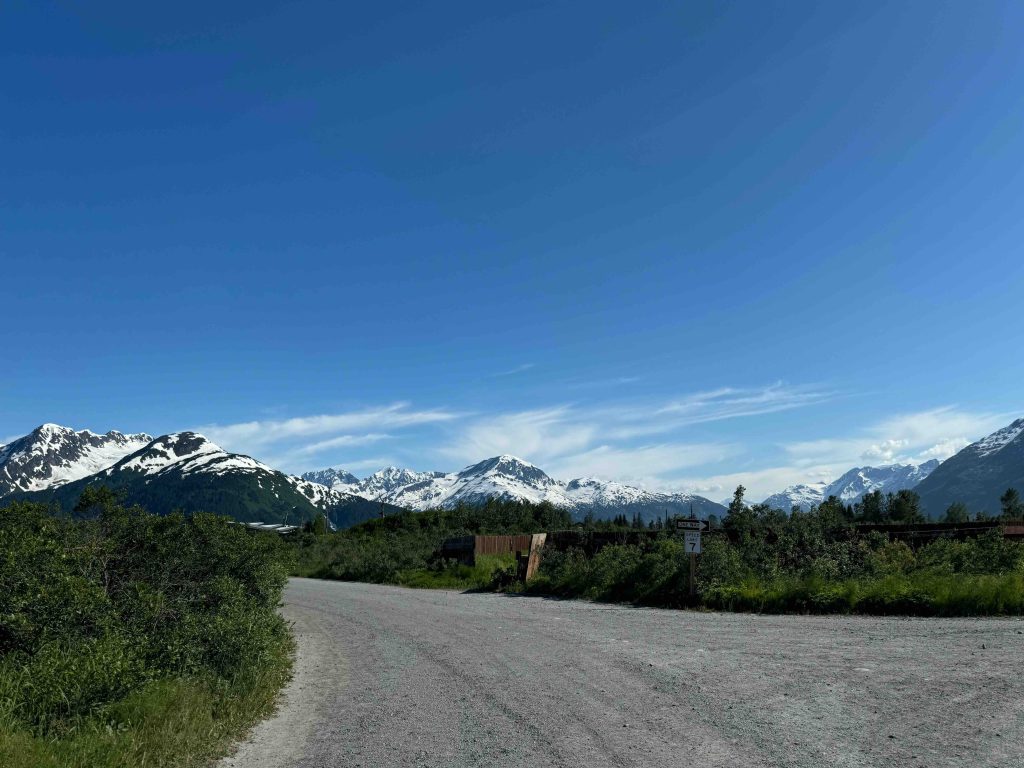
After picking up our car, which was a Toyota RAV4 (a common SUV in NC that everyone seemed to have) from the rental agency lot, we passed a petrol bunk installed inside the building and went upwards on a ramp that led us to the open terrace of the building were there were more cars parked. Out in the distance, we could see the snow-capped mountain scenery. Any outdoor view from the airport would have mountains in the picture!

There seemed to be two ways to get out, though there were no directions for the exit. We took the first one and came down the other side of the petrol bunk! That wasn’t the one, but we noticed another pathway leading somewhere else – it was again a circular ramp, and Moorthy took the car on it. After one circle, we came to a dead end where there was an access-restricted gate! This was an awkward spot because Moorthy had to come down the circular ramp in reverse gear (there was no space to U-turn). Moorthy managed this while the three of us kept a watch for any vehicles coming in the opposite direction up the ramp.

We were back near the petrol bunk – the problem was that the place was deserted, and there was no one in sight anywhere. Fortunately, a few minutes later, there was a lady who came in a car, and Raghav asked her for directions – she asked us to follow her car and took us past another gate that said restricted access but opened for her to take us into some other rental car lot; once here, there was a direction to the exit – up another ramp, we went to get out on to the street. We had spent 20 minutes inside that deserted rental lot, struggling to get out!

Driving out – mountains in the background

Our first stop was lunch – and we found a restaurant called “Taste of India” that was just a 5-minute drive away. Looking at the map of Anchorage, it felt like the places we wanted to go to today were all within a short radius of the airport. Even downtown Anchorage was only about 7 miles away (15 minutes drive). The restaurant was situated in a shopping plaza (in the US, they call these strip malls since you have a strip of stores, one beside the other). The weather was super pleasant – clear skies and temperature almost 20 degrees Celsius. Inside the restaurant, there were a couple of groups dining, while Indian film songs were playing on the TV. We left the ordering to Raghav and Rakesh – we started with pakoras, which was a little disappointing because they weren’t the small crispy pieces that we were used to. But everything else was pretty good – especially the paneer, which was super soft. We didn’t have desserts but ended our meal with their masala chai. 

Restaurant in the mall

Categories
Travelogue USA

USA Part 9 – 8-hour domestic flight

Our flight was at 9:45 am; Moorthy received a message in the morning saying the wifi on the flight wouldn’t work. We thought it may take close to an hour and a half to get to JFK airport, but the Uber managed to zip through in 50 minutes – barely any traffic on this Saturday morning. Alaksan airlines was from Terminal 7, and unlike the usual expectation of heavy rush in the security line, this one was breezy – terminal 7 had many carriers that I hadn’t heard about, and they were all domestic.

What’s a cortado?

Moorthy advised us to download audiobooks, podcasts, or movies so we would not feel bored during the flight. The flight duration was an estimated 8 hours, but we’d reach Anchorage at 1:30 pm local time – start at 10 am and reach at 1 pm with the whole day left to spare is a bonus in travel. New York is in the Eastern time zone, while Alaska is in the Alaskan time zone. So 8:30 am in New York is 4:30 am in Anchorage. I later found that the state of Alaska itself has 2 time zones – but as part of our trip, we’d never get so far out west to enter their 2nd time zone. Alaska is the biggest US state.
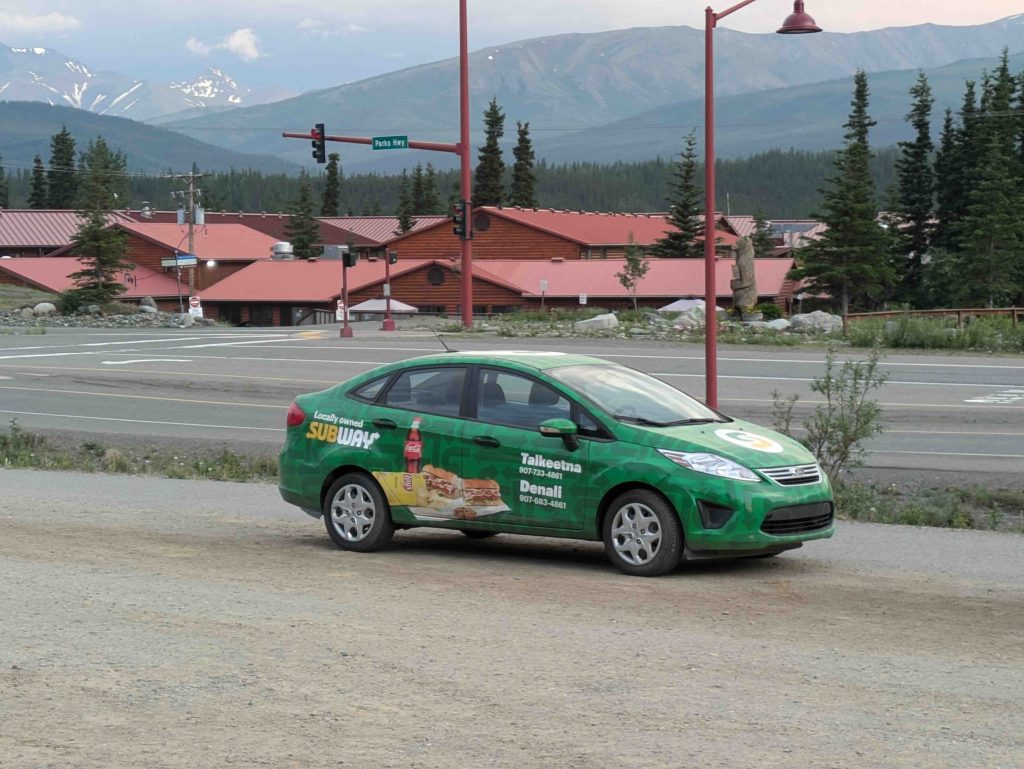
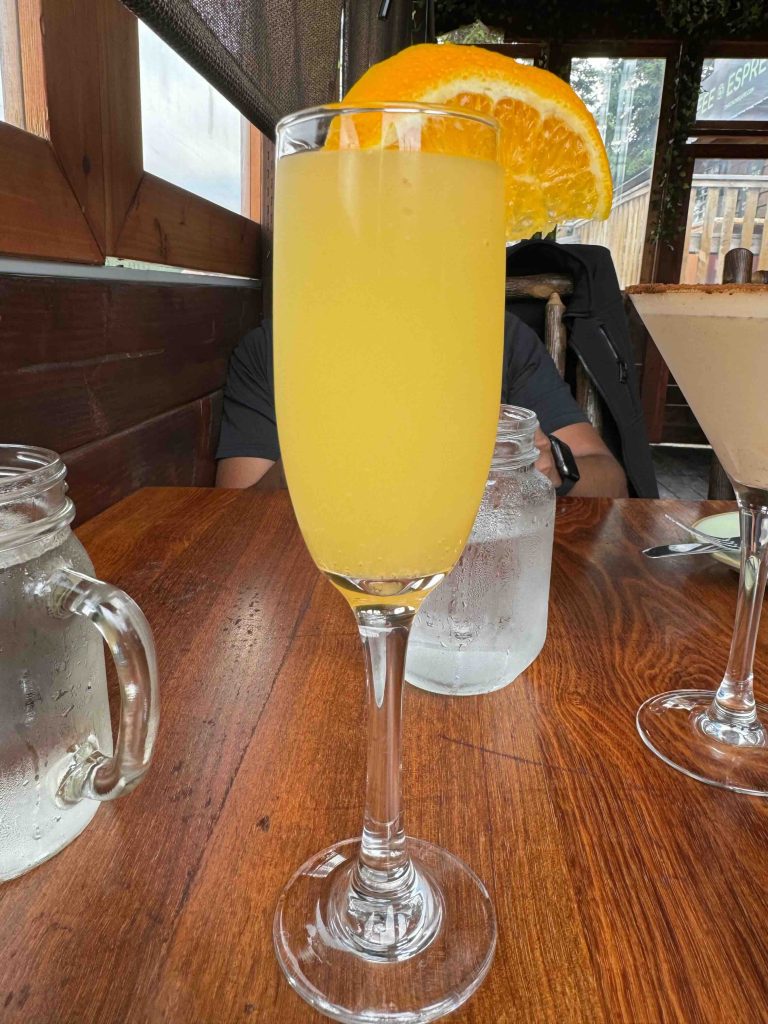
Since there was time for boarding, we went around the terminal searching for food options – there were a few eateries clustered in one section where we also ordered sandwiches and coffee. Rakesh ordered a cortado – this is something that he found in New Jersey where the size of a cortado would be a lot less compared to other coffees – cortados were served in small cups. After billing, when we went to the area where the coffee was being prepared, the Indian lady at the counter asked, “Do you know what is a cortado?” He replied affirmatively. And then she said, “Many people don’t know what it is. Do you know?” she asked again, and he replied that he did and that it’s made with less milk. Cortado has an equal amount of milk and espresso. But what Rakesh got was definitely not cortado – it was served in a large cup and way more milkier than he was expecting; it was like a latte.
“She obviously doesn’t know what a cortado is!”

After wrapping our breakfast, we headed to the boarding gate; there was a board that explained the practice of overbooking on flights; guess it was better to do an online check-in just to ensure you have a seat and don’t have a surprise in the airport. We thought the flight may not be full since how many people would there be travelling to Alaska, and that too on this one flight that was so long and non-stop. We were wrong – the flight was almost packed. 
But what was nice about the flight was that the seats in economy were better than economy seats on other flights – I had enough legroom that my knee wasn’t pressing against the seat in front. There was a USB charging port and a small latch at the back of every seat that could support a handheld device if you wanted to watch a movie.

It was only after the flight started moving that Raghav noticed the safety card, which said this was a Boeing 737 Max – and that was when I realized that this happened to be the same airline where there was the recent incident of the door falling off when the flight was in the air; and Boeing’s 737 Max had a couple of fatal crashes a few years earlier that brought it in the limelight. Well, it was truly too late for us to make any changes to our decision now!


During the flight, the air hostess came around 3 times, serving drinks and a couple of biscuits – nothing fancy here, but they did have a separate menu for a few more items that you could pay and buy – Moorthy tried one which was a type of cheese platter. We sort of assumed that alcohol would be charged (at least that’s what it seemed to indicate in the inflight menu) while other drinks like soda and fruit juice were free; Rakesh asked for an alcoholic beverage, and the hostess gave a small glass bottle and water and didn’t ask for any payment. Perhaps one drink was free. Since I had asked for water more than a couple of times, the air hostess gave me a 1-litre cardboard water bottle instead of pouring out cups each time I asked! 

It was in the second half of the flight while reading the flight booklet, that I discovered they had a streaming entertainment service – wifi was charged extra (and maybe the message they sent earlier in the day was about the paid wifi not being available), but their inflight entertainment was available; you could use your own device to access it. They had a bunch of movies and some TV shows. “Freud’s Last Session” caught my eye – because of the actor playing Freud and the premise of Sigmund Freud meeting author CS Lewis to debate the existence of God. I could only get through half the movie since I started this late. The second half would have to wait.

We knew when the flight was above Alaska because you could see snow-capped mountains and glaciers from the flight itself. It looked pretty from above. We had a smooth landing, and even from within the airport, when you looked outside through the windows, you could see the snow-capped mountains at a distance.


The Ted Stevens Anchorage airport felt a little more homely than most other airports – maybe because of the way it was decorated inside or the lighting inside, or maybe just the unique artefacts you found on the floor or ceilings. 

As we followed the directions to the rental cars section, Raghav exclaimed, “There’s the first bear – the polar bear.” A life-size statue of a white polar bear stood on its legs, ready to pounce.
The white bears also look cute, but apparently they are the most dangerous and largest in size! 
We went down a long pathway with posters and artefacts about Alaska on both walls and finally came into a bright area with many rental counters. 

Categories
Travelogue USA

USA Part 8 – Bear stories

We had booked the evening train from Boston South Station to NJ Penn Station – there are Acela trains, which are the faster ones but slightly more expensive; we had opted for the normal Amtrak, which was an hour after the Acela – but in the afternoon we discovered that the Acela was cancelled due to some power issue in the New York station. 

Today was the day when the Boston Celtics, a basketball team that won the NBA finals just earlier this week, was doing a victory parade through the city. There were huge crowds in Boston, and from our office, we could get a peek at the train station, which also seemed crowded. 

Our colleagues and friends were surprised that we were going to vacation in Alaska and even more surprised when we told them that we hadn’t yet planned/booked anything. A couple of folks who had been there in the past did ask us to book for the main events because otherwise, we may not get seats – but in the last few days, we hadn’t managed to get to do the research or the bookings. We did hear a few interesting and scary stories – everything involving bears. 

Bear encounters

“If it’s brown, lay down dead; if it’s black, then fight back,” they said. We learnt there are brown bears and black bears, and grizzly bears are a type of brown bear.
“There was this time when we had a group of tourists go hiking. We told everyone what to do on seeing a bear, and everyone had bear spray cans. There was this trio of young Indians in the group, and along the path they took, they happened to encounter a black bear – they were frightened and ran. Two of them made it back, but the 3rd one was missing; we retraced their path and found that the 3rd person was killed by the bear.”

Since bears are large, you think you can outrun them. But seems like there is no chance of outrunning a bear – they apparently run faster than us!

“If it’s a black bear, just band up together and make yourselves look large. Hold your hands together, stand on your toes, raise your arms wide, and make sounds and faces. It should feel that you are big, and then it will go away without wanting to mess with you.”
We heard another story later from the same colleague, “I was out with my friends in the woods. We all had guns. And there at a distance of about 10 meters, we spotted a black bear. Just the distance from here to that pillar there.”
“We crouched behind some logs lying around to avoid being spotted. But we noticed that a small black bear was coming towards us. The mother was keeping an eye on the cub. As it came closer, we kept whispering to the bear to go away, go away. After taking a few steps towards us, it turned away. We were ready with our guns in case of an encounter.”
Well, we definitely weren’t going to be armed with guns – so that wasn’t a fallback option for us.

“Recently, there was a news story about a guy in the forest who didn’t manage to use the bear spray can in the panic. He turned around, holding the can in the air near his shoulder. The bear came to bite him but bit on the can, which exploded. This saved the guy. Miraculous escape.”
Bear spray cans are like cockroach or pesticide spray cans that are supposed to be effective in deterring a bear from advancing towards you.
“As soon as you land in Anchorage, there’s a Walmart nearby where you can pick a bear spray can,” he advised us.
Another person asked us, “What bear would you like to see?”
And Rakesh replied, “A teddy bear!”

We had to drag our large suitcases (the ones you check-in at the airport) to the station. We got in through the back entrance, bringing you straight to the train tracks. Moorthy came in from Merrimack and entered through the main station entrance. We met just outside our train – it had arrived and was on time. 


The Amtrak train had seats that were like flight seats but were much more comfortable and had more legroom. The train also had plenty of space above for luggage – we could easily stow our suitcases on top. There was no assigned seat on the ticket, and we took an empty row – each row had 2 seats on either side of the walkway. The train had wifi, and Moorthy logged in to do some work; Raghav and I started researching Alaska – we still didn’t have any plan in place, and the plan was to plan in the train. The net wasn’t great, but it was ok. 
As the train moved, the announcer made repeated announcements saying the train was fully booked, and so, if something doesn’t move then stow it on top! Basically, she didn’t want luggage taking up seat space.

Amtrak train

The conductor came around to check the tickets and placed a little stub above the seats where she had verified the tickets. After an hour or so, Raghav was hungry, and so we walked past coaches to get to the end, where there was a cafeteria – the setup was nice in that there was a small canteen and one coach with tables set up like a restaurant. These were all occupied – was a comfortable place to sit and work since you had large tables, unlike the small ones attached to the back of seats in the other coaches.
A railway staff was handling billing and delivery – not too many items, but if you are looking for a quick snack, you can manage with what they had. The best option, like in India, is to buy something before boarding the train.

Midway through the journey, the train had a long halt in a station – the announcer said they were waiting for connecting passengers coming in from another train that was delayed. This led to our train getting more delayed, but since the train was comfortable, you didn’t feel too bad.

We reached NJ Penn Station past 11 pm – lugged our suitcases up the escalator, and dragged them to the station exit. As we stepped out, a couple of cranky folks came uncomfortably close to us. But there were plenty of cops nearby, so we felt safe. The cops were animatedly chit-chatting like it was daytime – not sure if so many cops at night in the station was a common occurrence here. We hopped into an Uber and reached Rakesh’s place at midnight, where we had dinner. We also had to do some packing to just carry the essentials needed for the Alaska trip and leave behind everything else. And we also had to book a place to stay in Anchorage – that was one thing that we knew for sure because the day we reached Alaska by flight, we didn’t want to make any other travel plans. Rakesh and Moorthy searched for places and finally agreed on one that looked nice.


On TV, we streamed videos of Alaska and bears! The bears look cuddly and cute even though they are large – would be nice to pat them like we patted Maggie (one of our colleague’s Alaskan Malamute)!

Categories
Travelogue USA

USA Part 7 – Bond in action

Boating rules

We tried fishing for 10 minutes and didn’t catch anything; since time was running out, we decided to move on. Each of us took turns driving the boat – it takes a while to get a feel of steering the boat – because you would have turned the steering wheel, but the impact of that in the direction is only seen after many seconds – turning the steering wheel turns the engine direction (the response lag was more noticeable in slower speeds). We munched on some of the healthy snacks we had brought on board – the musk melons were yummy – a little chill and juicy; the trail nuts created quite a mess on all our hands since they contained chocolate bits that melted instantly in this weather.

As we neared an island, Rob told us about the lane rules – there were green and red cans floating around at periodic distances – not too close to each other but spaced out.
“When going in, stay closer to the red, and when coming out, stay close to the green.”
The red cans were on the right side, and the green cans were on the left.
As we took turns on the wheel, he warned us, “Don’t go too close to those cans. They are solid metal.” 
When you see them, you’d think they are harmless inflatable balloons, but when we neared one, I realized it was deceptive from a distance!

The boat had a Garmin navigation system along with something like an intercom that could be used in an emergency. The display showed how many feet above water we were – comes in handy when you want to know whether you are too close to land – because, say, the boat is just a few feet above water, and you stopped at that place; if the seas went into a low tide, then we’d end up with the boat being on land and that would become a problem – you’d end up having to wait for the high tide again to drive it or if you are not caught fully on land, would have to push the boat back to the waters!

Anchoring

When we came close to boat traffic, Rob took to the helm to manoeuvre the boat – he decided on a place near a small island for anchoring and getting to the island. There was another larger boat beside us struggling a bit to get their anchoring right. Our boat’s anchors (two of them) were tucked inside a small enclosure – one in the front and one at the back. Everything on the boat was neatly organized – nothing was out of place. 
To anchor the boat, you take out the large heavy metallic anchor and toss it away from the boat (one end of the rope is tied to the anchor while the other end you’d fasten on a hinge provided on the boat) – the danger of using just one anchor is that your boat would still sway a lot. 
The problem with anchoring near these small islands is that you need to watch out for other anchored boats – if you get too close, you could have your boat’s propellor cut or get entangled in the other boat’s anchor line. 

The anchor

Because the boat next to us was struggling after we dropped the anchor, we were worried their boat was drifting our way. So Rob, like an action hero, removed his t-shirt and just dove into the water to retrieve our anchor and save the boat so that we could anchor a little further away. I don’t know how Rob plunged in because the water was extremely cold – it is deceiving because judging by the sunlight with the sun blazing, you’d expect the water to be warm. 

Ice water plunge!

After securing our boat, we headed to the island. The water level was only about hip deep – sitting on the edge of the boat near the engine, I dipped my feet in the water and felt the biting cold. I would have been happy to just sit there, but when you are in a group, and the others have ventured into the freezing water, you don’t have a choice! I was the last to step in, and my whole leg was stinging. It was a weird sensation – cold, pain, pricking feeling, and some numbness. After 2 or 3 minutes, I reached the shore. Since Rob had already done the plunge, Biju went straight down the water for a few seconds, and then Raghav did the same. Rakesh and I were happy to watch the spectacle from the shore. 

There were quite a few people on the little island. We sat briefly and then waded through the waters to hop into our boat. Rob lifted the anchors, and we pulled them in and stowed them inside their little compartments. We motored along at high speed, and for a while, our boat’s bow (the front) seemed way higher than the stern (the rear) – so for the two of us sitting in the back, we were looking up into the sky. Rob later adjusted the height of the motor, and that brought the bow down – still a little inclined, but not a lot. At high speeds, you can feel the boat bouncing up and down the waves – a nice rocking motion taking us forward. 

When we were on the last stretch, Rob let me take a shot at parking the boat and guided me to navigate the boat towards his buoy. When I got the boat really close, he tied the boat to the buoy and then switched off the battery inside the boat (the panel was hidden behind a small door at the rear). We then waited for the passenger taxi boat to get us back to land. Rather than buying a boat, there is also the option of renting out boats in these places – that way, you needn’t worry about maintenance. The water taxi parked in a dock, and the parking felt very much like how you park a car in a parking slot. 

Rob had timed this trip well by scheduling for us to start in the morning; at 1 pm, when we came to drop off some stuff in the car, we noticed that the whole parking lot was full, and cars were going around in circles hoping that someone will be pulling out their vehicle. 

We had lunch at about 1:30 pm in the Mill Wharf restaurant; there were no seats available, but we noticed that outdoors, it was empty – we picked a table, though it was pretty hot outside. Felt a bit like the Chennai heat (humid heat)! 3 folks had a little shade while the other 2 were facing the sun. We ordered tacos, fries, and onion rings. 

The next stop was Nona’s homemade ice cream, which Rob said was good. There were already folks inside, and we joined the line. What I liked was that they not only had a small, medium, and large portion size but also a kiddie version. The kiddie version was perfect for me – a single scoop. They were priced lower than Ben and Jerry’s ice cream, which we had tried in Boston.

By the time we were back in Boston, it was a little too late to make it for squash in Rhode Island, so we made a short trip to Merrimack to wind up our fun day. 

Categories
Travelogue USA

USA Part 6 – Boating into the ocean

Today was Juneteenth, a new US holiday that came into place recently to commemorate the ending of slavery in the US.


We had an early morning start – taking an Uber to a boat station to catch a boat. In Boston, there is the MBTA (Massachusetts Bay Transportation Authority), which runs the public transit system – also known as the ’T’ – and provides rail, bus, and ferry services. The Uber driver took a slightly different route from what Uber suggested, and I wondered if he was heading in the right direction. He stopped just past a signal and told us the station was across the footpath. When going to new locations, you tend to have this fear when the cab takes a different route – my fear was us missing the boat! Unfounded fear, it turned out to be.


The boat was already there waiting, almost ready to go in a couple of minutes, and the staff standing on the ramp asked us for our tickets – they told us the MBTA app could be used, or we could get tickets from the counter. But since I already had the app for my train rides, I got 3 tickets for the ferry. The app allows you to buy the ticket in advance but activate it during your ride.


It was a pleasant 30-minute ride – motoring along the Massachusetts Bay southwards (this bay is part of the Atlantic Ocean). I haven’t done boat rides on the ocean, so this was fun – an endless stretch of water. We reached the Hingham Terminal, and just like a car parking facility, this was an area for parking boats – there were plenty of private boats (Hingham is a town in the state of Massachusetts). We picked some snacks from a supermarket for our boat ride – a few cut fruits (muskmelons) and trail nuts – yeah, all healthy items, and since we were travelling with Rob, it was apt. We then drove via another town called Cohasset to Scituate. 

Boat parking

Rob had a boat that was parked in a facility over here. There are multiple such facilities in these seaport towns that have parking spots for a fee. You have a couple of options – you can get a dock, which is sort of a proper structure beside the coast where you leave your boat, or you pick a mooring which is not near the coast but a buoy a little further out in the waters to which you anchor your boat. Each has pros and cons – cost, convenience of easily getting out into the waters, parking etc. And it’s not easy getting a spot since there is a lot of demand for it.


The drawback of a mooring is that since it is further out in the waters, you need to get a ride on another boat to take you to your boat. There is typically a service provided in these facilities for that – sort of like a short ride-sharing boat taxi service – we hopped into one, and the lady manning the boat took us to Rob’s boat after dropping off a couple of other folks in their boats on the way. Pretty fascinating watching how this whole setup operates – I’ve never seen one back home.

We soon reached our boat – a Grady-White boat; Rob briefed us about the company and said that their boats are designed such that even if the water came on the deck, the boat wouldn’t sink. Depending on their size, different boats have different motors/engines for propelling the boat; each engine has propellers at the bottom. Rob’s boat had a single Yamaha engine. Our boat was like a convertible – since it was a hot sunny day, we opened out the convertible shade to provide us with some sunshade. When the boat is not in motion (i.e., docked), the engine is lifted so that the propellor stays above the water to avoid the effect of salt water damaging the engine. When driving, we lower the engine so the propeller is in the water and start the boat.

If you are curious to learn about these boats, the Grady-White company has some boat tutorials: https://www.gradywhite.com/explore/the-grady-life/videos/?filter=9720

After putting up the shade, Rob explained a few other things about the boat. It was fascinating that they had found a way to construct a restroom inside – you wouldn’t even guess there was one even after stepping on the boat. But there it was, in what seemed like a small door to a cabinet – but instead of a cabinet, it was a little restroom down below.
There were seats to sit just next to the driver(driver’s seat was sort of in the middle on the right side), as well as behind the driver (the back is called the ‘stern’). Also, in front (the area called the ‘bow’ of the boat), there were seats available. Six people could comfortably fit on the boat without feeling congested. 

The calm in the ocean

We were soon zipping away with the boat rocking along small waves on the ocean. Rob went on top speed and then shut off the engine at a point when he asked if we wanted to go fishing. He showed us the equipment used for fishing – the rod, the fishing line, the hook, the sinker dead weight and the fishing reel to let the line go further down in the water or to reel the line back in. The dead weight at the end of the line makes it easy for us to launch the fishing line in a particular direction and also helps take the line into the water. The hooks are pretty sharp in differing sizes, and Rob warned us to be careful when handling them. 

There is something about sitting in the middle of the ocean with the engines turned off – the noise you hear is just that of the water, and the sights you see are just small waves all around you and the sky on top – occasionally, there may be another boat passing by, but most of the time, there’s no one else around. Seemed like a nice getaway from the city – come to the middle of the ocean, read a book, listen to music or just do nothing but watch the waters.

Categories
Travelogue USA

USA Part 5 – Akshardham

We first headed to our colleague’s home in Yardley, Philadelphia, about an hour and a half away (NJ borders Philadelphia on one side, and the two have the Delaware River running in between, which we crossed). Raghav was fast asleep at the back – he did have this habit of catching up on sleep during drives!

Driving in the city

Rakesh was forced to drive within city roads – and here, these were just two-lane roads on each side, but one lane was taken up for car parking; so effectively, it became a 1-lane road on either side, and the divider is just the solid double yellow line painted on the road. In the US, the lines determine some traffic rules – a solid line means you can’t cut across the lane, and a dotted line means you can switch to the other lane.

We found ourselves stuck on the wrong side of a solid double yellow line while the shop we had to go to was on the other side of the road. In India, we would just see if there was incoming traffic and make the turn – but here, Rakesh struggled to find someplace where it was ok to cut across. The same struggle happened when we had to exit the complex to get to the other side of the road. 
Even in India, we have a similar road marking system, but on many roads, the lines have disappeared, and in other areas where they exist, barely anyone follows them. 

Finally, we got to our colleague’s home, where we were welcomed by his pet, an Alaskan Malamute – they look like Huskies and are large, like a little wolf! It was pretty playful and, I guess, excited seeing 3 visitors in its abode. There are strict rules on taking dogs outside in the US – you can’t let them loose and have to keep them on a leash; Maggie was an attraction outside, and in the short while that we spent outdoors, a little kid came up asking if he could pet it – with so much fur, it’s hard to resist giving it a little rub. They also shed a lot of fur when they shake their bodies. We enjoyed some juice and cheesecakes in our colleague’s home before leaving. 

The grand temple

It was about an hour’s drive to Akshardham – as we approached the destination, we noticed a board that said that on weekends, a reservation was needed for entry. The last time Rakesh was here, he didn’t make any bookings – we wondered if this had become so popular that they were issuing entrance tickets. Anyway, since we had come all the way, we decided to check it out – the worst case was that we’d be turned back. There were so many vehicles around, and people still driving in, though it was mid-afternoon. 

We did have to sign up online to make a reservation and get entry – Rakesh did so; I guess they were building a database of all visitors – for some reason, this was only for the weekends. 

The name of the place is BAPS Swaminarayan Akshardham (eternal abode); we’d been to this temple in New Delhi a few years ago, and it is quite impressive; I had heard that the one in the US is even more grand and was curious to see this. You are welcomed by a massive statute of the teenage yogi Neelkanth Varni (this was Swaminarayan’s childhood name) standing on one leg – he is said to have done so for about 2 months and started his spiritual journey at the age of 11. There was a large water body with fountains that we crossed to get into the queue to enter the temple; it moved quickly – and we were soon inside the first hall; it was the reception area that could match the reception of any 5-star hotel – impressive decorations, artwork on the ceiling and pillars, there was an information centre, an orientation centre, small theatres on the sides, drinking water taps etc. The reception area was quite crowded. Dhotis were available for visitors to wear in case they came in shorts; we stepped past it and into the outdoors from where we could see the main temple – it was a sunny day, and the temple looked grand and impressive from the outside.

Inside, there was a place to remove our footwear before entering the main area of the temple in the centre. Because of the crowd in the temple, you stood in a line, and the line was asked to keep moving – so you couldn’t really sit inside the temple. There were many sculptures inside, within their dedicated enclosures – everything was made of white marble; intricate designs on the pillars that probably depicted a story – but we could not spend much time inside since we were asked to keep moving.

Based on what Rakesh said, this was how it was on his first visit here too, and I had heard the same from another person earlier. Maybe weekdays are better? I just wished we could have spent more time inside the temple. Photography inside the temple, just like in most temples, is prohibited. There are signs saying not to touch the marble pillars and carvings – so they have one small area where they’ve kept the marble used in the temple for touching. Some photos/videos of the temple’s interior are available on the official BAPS group website. And some of the Wiki pics I’ve given for reference just so that you get a sense of the grandeur – the place is an incredible sight to behold, just like the one in New Delhi, which is also very impressive.


This temple is among the largest in the world, slightly larger than the famous temple in Trichy (India). Topping the list in size is Angkor Wat in Cambodia. 
As we exited the temple, we saw images taken during the construction. 

There were visitors of various nationalities here – this was sort of like a tourist site that I guess many had on their to-see list. If you were into religion and spirituality, you’d probably be interested in learning about the group and their philosophy; if you weren’t interested in that, you’d still enjoy the architecture. I’ve found that when you see large Buddha statues, there is a sense of awe that overcomes you; similar is the case when you look at temples that have so many intricate designs from the base to the dome – it’s not just the resultant structure that inspires – you can sense the amount of care and effort that must have gone into making it perfect; that also inspires.

Since we hadn’t had lunch, we headed to the Shanoya cafe inside the temple complex – an all-veggie cafe. On the way, we saw a gift and book shop too – that was also quite crowded; they did seem to have some nice items for sale but we didn’t stop there. The cafe was also a bit crowded, though we were well past lunch hour – they had live counters, boxes that you could pick, a lot of snacks, as well as meals and desserts. Their cafe sales were probably better than what many full-fledged restaurants would make – the food was decent; some items were good, and some were ok – since there were 3 of us, we tried several dishes.

As we headed out, there were still plenty of visitors pouring in.