(Note: This is a one off edition of a weekend trip in India – to continue with the Alaska travelogue, you can jump ahead to the next page)
I had entered a room that got locked while I was searching for something I had left behind. I noticed through the window that we were going down and the water level was rapidly rising. Still no water had entered the room, but just then, I heard a creaking sound as if some structure was about to cave in. Will the water rush in?
And that’s when I realised it was a dream – thanks to Ajay and Bala who arrived 15 minutes early on Sunday morning and woke me up.
Quite ridiculous our dream setting seems once we wake up – a room falling! But it did feel quite real while I was in the dream!
The trigger
It was a planned trip in terms of the date (Sunday) and the 3 folks who would travel, but everything else was unplanned – and since it was just a two-hour drive from the city, we didn’t think much about it. But on Saturday evening, while talking to Udhay, he asked, “Have you booked a boat?”
“Bala planned to take one there.”
“But you won’t get – it will be a hassle.”
Thanks to Google, Bala found one, and they told us to arrive by 6:30 am. Since Udhay was free on Sunday morning, he also decided to join us. And then Udhay mentioned, “There was a boating accident there, and 20 people died.”
Bala said that the lake is shallow and we can wade through it – so we shouldn’t need life jackets. But he also said he remembered there was a news item about this accident ago.
Udhay showed us an online news article from more than a decade ago. We checked with the operator if they had life jackets, and they did, but the guy said we won’t need them. At least it was comforting to know they had it.
At night, I was reading about the lake and found the list of incidents that happened – the major disaster was in the early 2010s; a boat with 25 people capsized and 22 drowned – the reason cited was that too many people were on the boat, and also that on the return journey, many members went to one side of the boat, causing it to topple. Boating was banned after that incident. Following that, there were a few incidents in the late 2010s, one being a boat ramming into another boat, leading to the tourist drowning.
But if you research about the depth of Pulicat lake, Google said a lot of areas are only 5 to 6 feet deep, but some spots go to 30 feet – specifically near the estuaries.
Maybe we’d just be in the shallow waters, and that’s why the operator said there’s no need to worry about a life jacket?
From what I read, it seemed like boating may still be banned – wasn’t sure if this was old or still in place. Oh well, will have to find out tomorrow because there were also many videos posted by folks in 2020s about their trip to the lake. It was 11pm, and I had to sleep now, or else wouldn’t be able to get up at 4:15.
Early start
Though they came early, I still took time to get ready, and we picked Udhay up by 4:45am, and off we went. Google said we’d reach by 6:16am; Ajay wanted to make a quick pit stop for coffee since his day doesn’t start till then. “We can take 10 minutes, and we’d still make it in time,” he said.
We missed a large local coffee outlet (though with this outlet, it’s hard to know which one is real and which ones are a copy). But the next one we saw was a small joint called “Lord of the drinks”!
A stray dog outside the joint caught my attention. It was patiently trying hard to lap up the little leftover coffee from the small white paper cup lying on the mud. After that, since it couldn’t get to the inner edge where there was coffee decoction, it managed to tear the cup and then lick off whatever was inside. Very often, we don’t worry about the last few morsels or the last sip that’s left.
We resumed the ride – the roads were great for the most part; this was the northern side of Chennai I had never been to before. We reached the place ahead of schedule and parked our car – there were already many cars parked there; perhaps they were folks who had come in earlier than us today.
Our boatman took us to the dockyard via narrow streets after stopping at his house on the way to grab a couple of his items. His was a long fishing boat with a diesel motor on one end; from here, there was a long metallic rod which had a small propeller. This boat is a typical fishing boat you see in India – there are planks placed on the boat on which you could sit.
“We won’t go into the deep waters, right?” I asked.
“Deep waters are everywhere,” he replied. Alright, Google was then wrong!
He loosened the ropes tied to the anchoring sticks and then tugged on a cable to get the engine roaring. As we started out, we saw a couple of boats filled with people returning, and their faces did look a little glum. We wondered if they found the ride disappointing, perhaps?
(click on the images to enlarge)
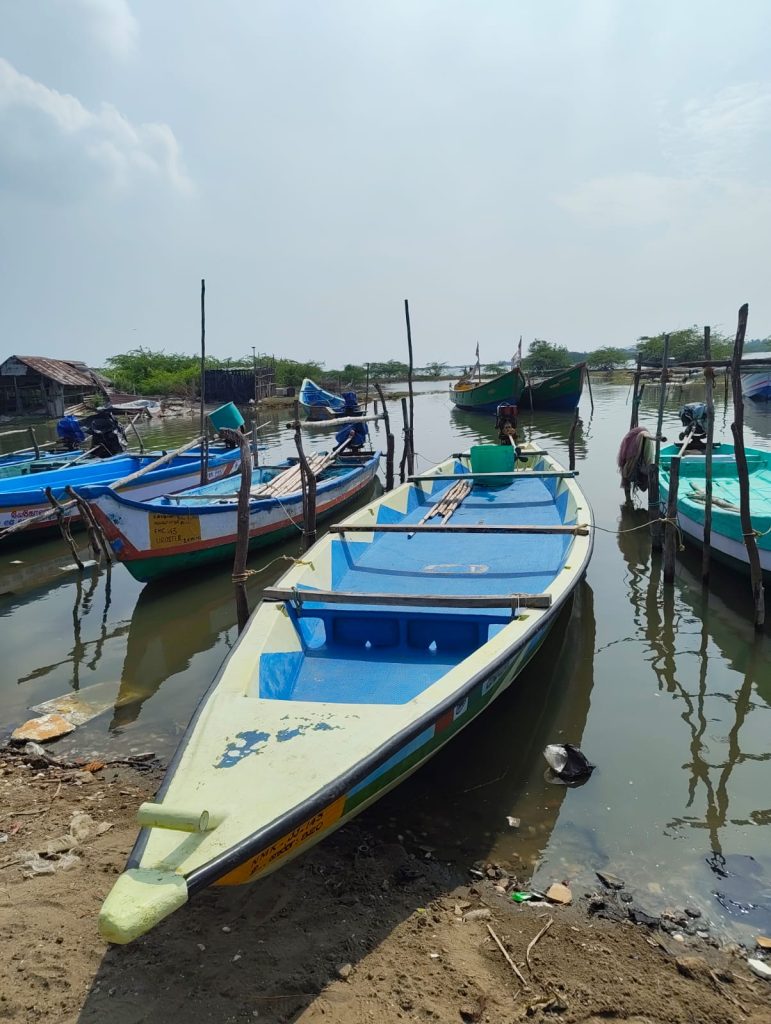
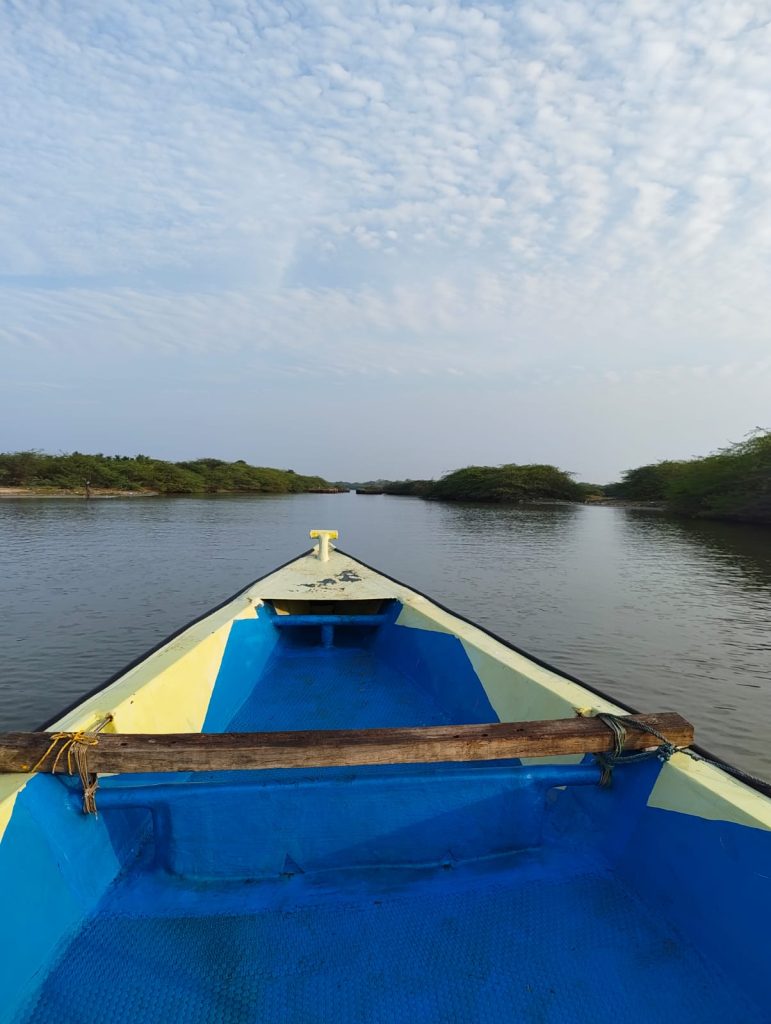
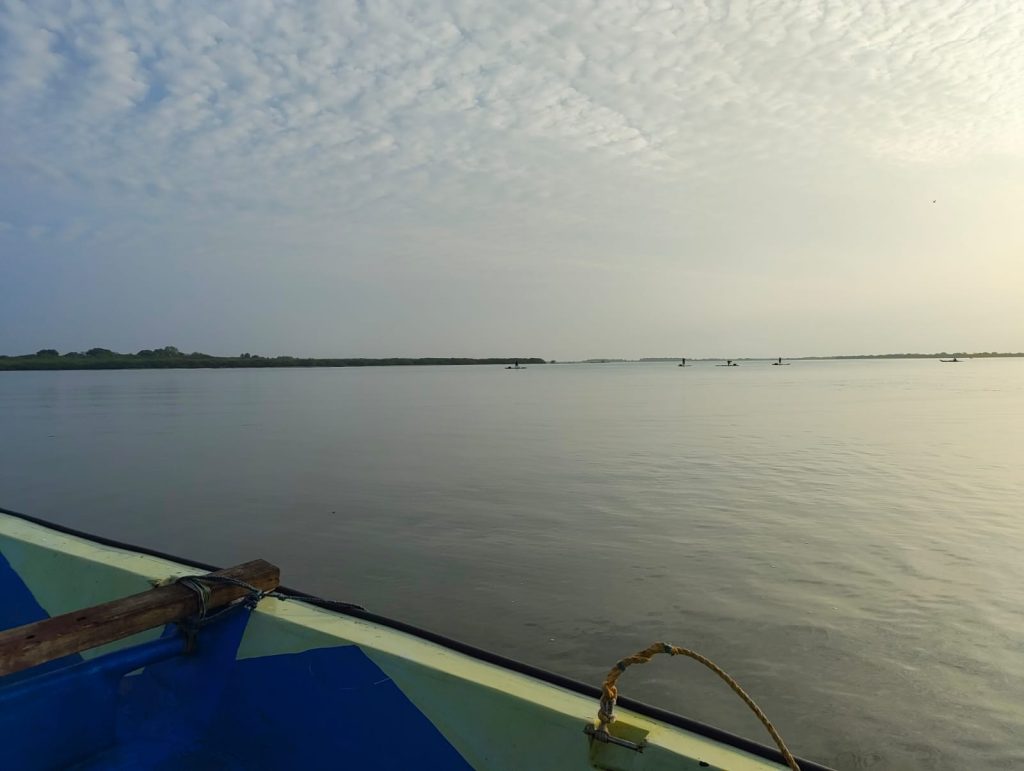
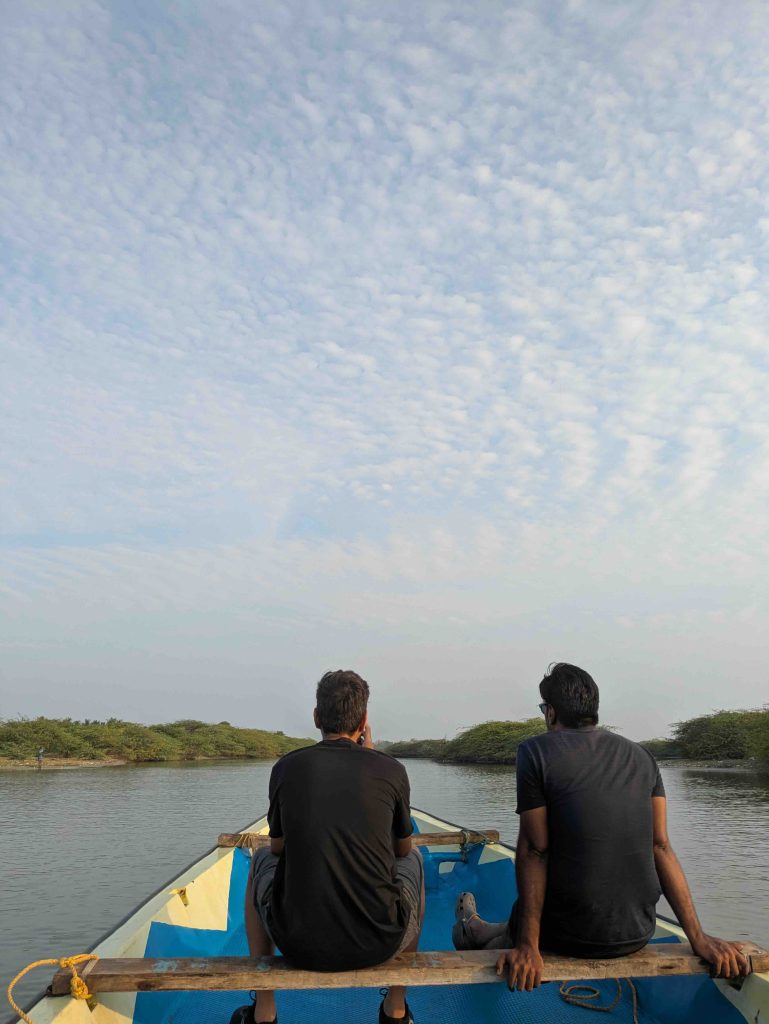
The seats on the boat are the wooden planks. Bala did find this a little painful on his bottom and our boatman added a second plank to make it easier. You can adjust the way you sit and you shouldn’t have much problem; you could also sit on the floor of the boat too. In some of the boats returning we saw people sitting on the edges of the boat as well – need to keep it balanced at all times though.
We went and went and went deep into the backwaters – the sound of the motor making it hard to have a conversation. Bala had told the boatman that we had come for the birds, and so, in between when Bala wasn’t looking to his right, the boatman signalled to a greenish bird perched on top of a stump rising above the water.
“With this noise, the birds won’t come,” Bala said.
There were plenty of small white buoys floating, which I thought were perhaps some navigation aid?
The gang
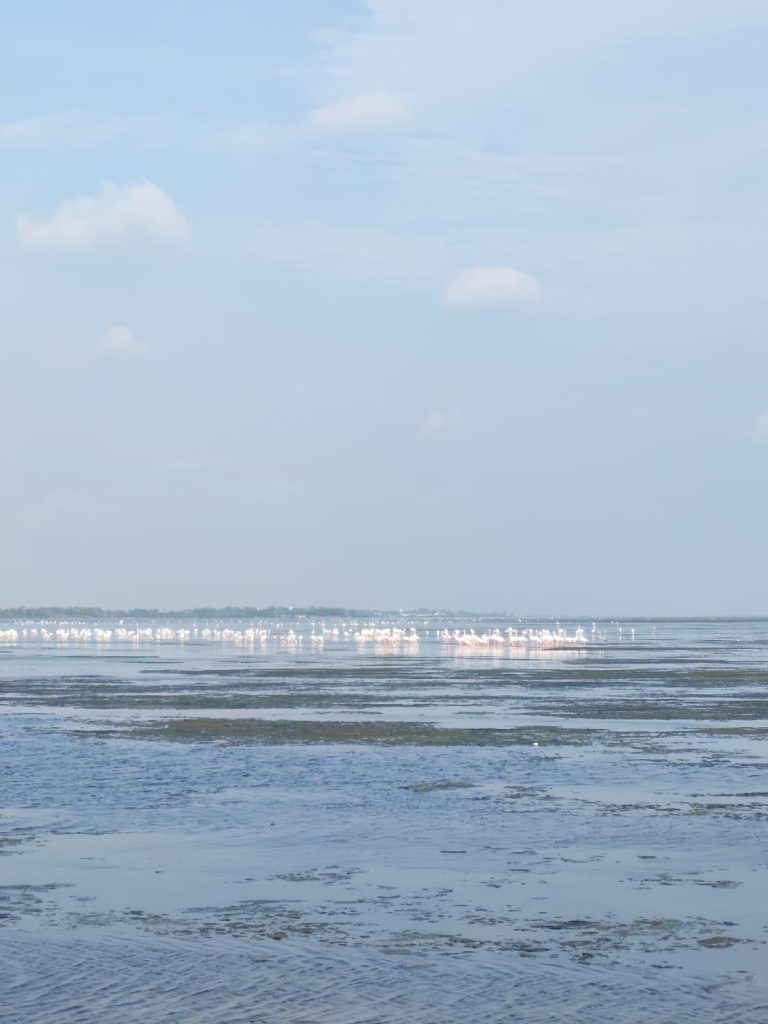
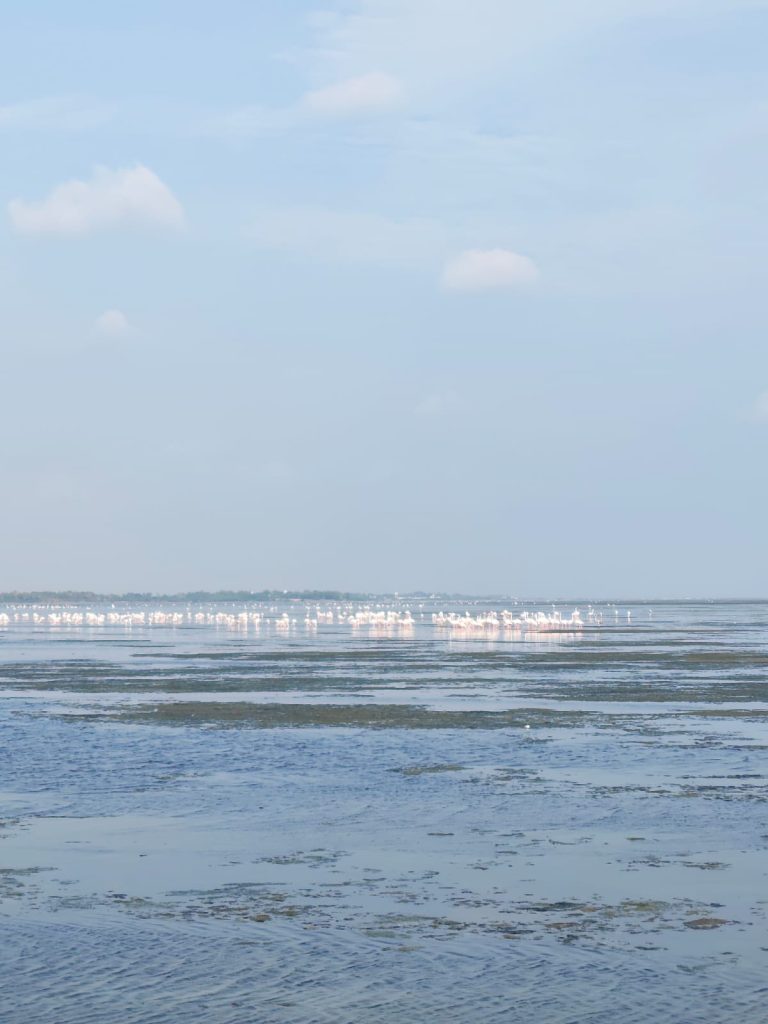
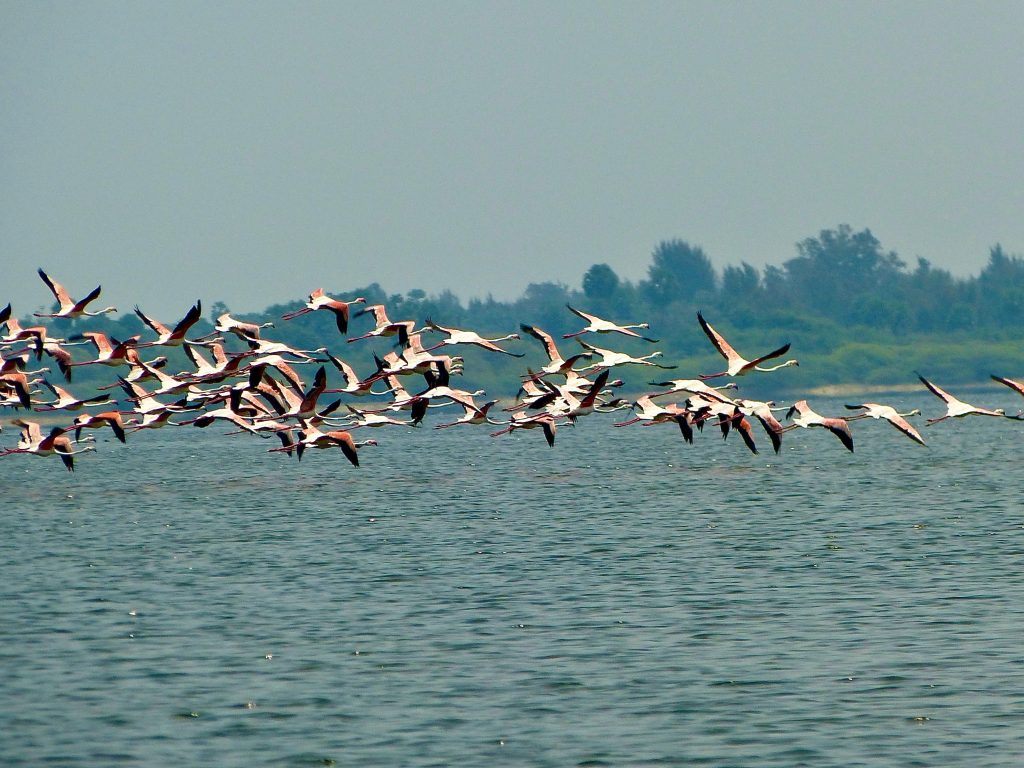
After a few minutes, Bala spotted something miles away. He passed me his heavy Canon camera with the lenses, asking me to take a look. “The flamingoes are there.”
I could see that he had captured shots of them on the viewfinder screen, but when I looked through the lens, I couldn’t see anything. I tried a couple of times and then figured that it was out of focus for me – I played with the zoom lens, and lo and behold, there they were – a large gathering of flamingoes.
After travelling further, the boatman switched off the motor. We must have travelled for more than an hour.
“The water is very shallow,” Udhay said.
We could see the floor just about a foot under, covered with algae.
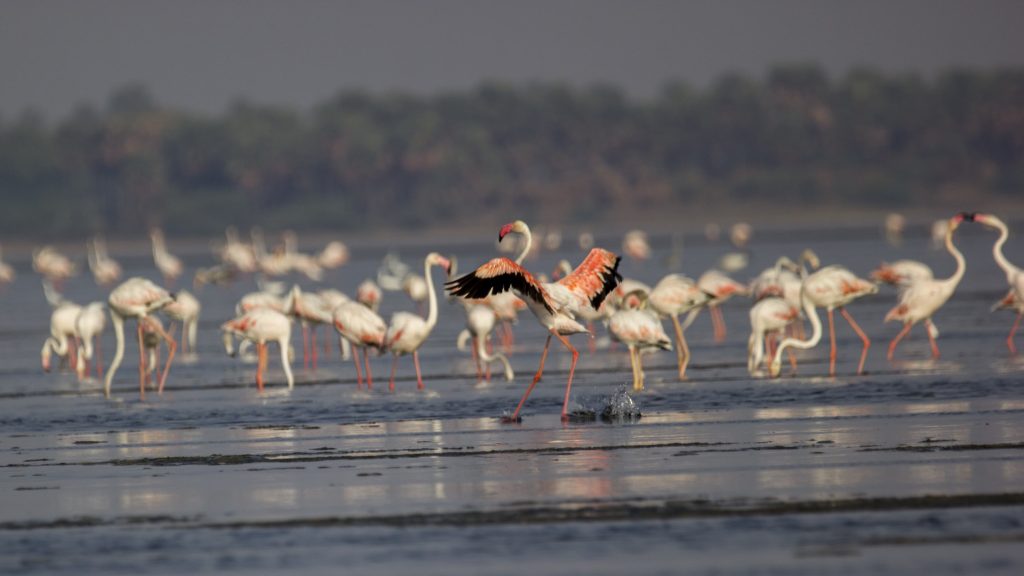
There was silence – just the sound of water flowing slowly around us. And up ahead, we could clearly see the flamingos without the camera – there were plenty. Using the camera, we could see them even better.
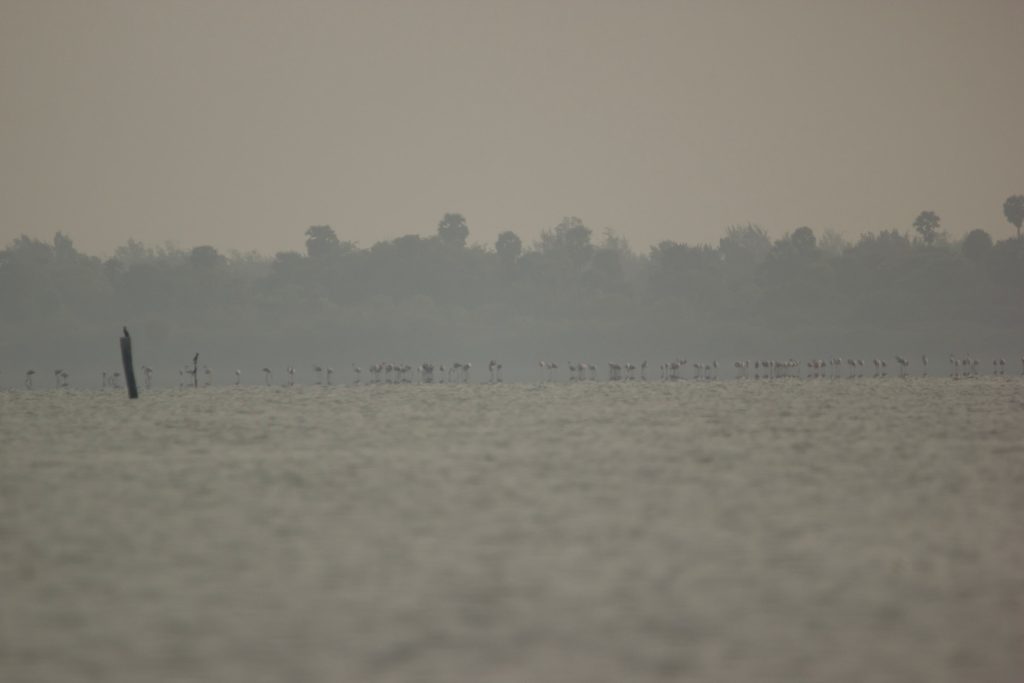
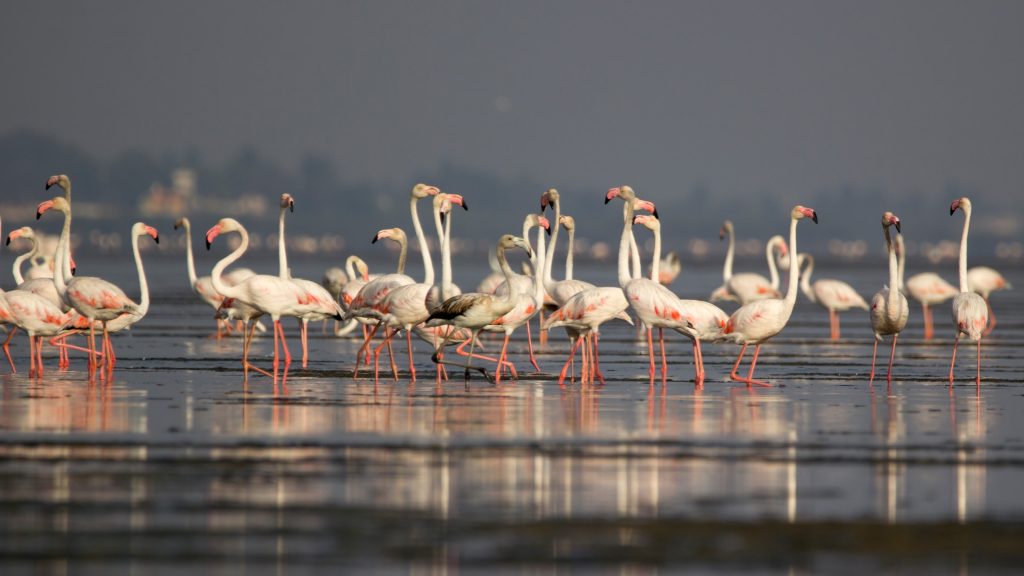
Udhay and I had a conversation with the boatman while Bala was trying different angles to get good shots.
“Have you been here for long?”
“All my life I’ve been here. Was born here.”
“Do you do fishing or just the boat trips?”
“We do fishing, but now is not the season – best time is late in the year when there are rains, and that time there are a lot of fish. Now it’s hard. So we do this boating guide work to help with our income.”
So the operators have different customisations that you can do – just bird watching, or you have a boat ride and then a cooked seafood lunch in one of the islands, or even night camping. There are some 36 villages around this lake.
Udhay got into the types of fish they catch – we discussed freshwater shrimps and backwater shrimps; people pick freshwater shrimps since they look brighter, but the backwater ones taste better. He described how fishermen shine a bright light on the water, which freezes the shrimp, and then easily trap them.
“You can go to the front of the boat,” the boatman advised Bala, for getting better shots.
Just then, there were a couple flying as well, and you could see their black wings.
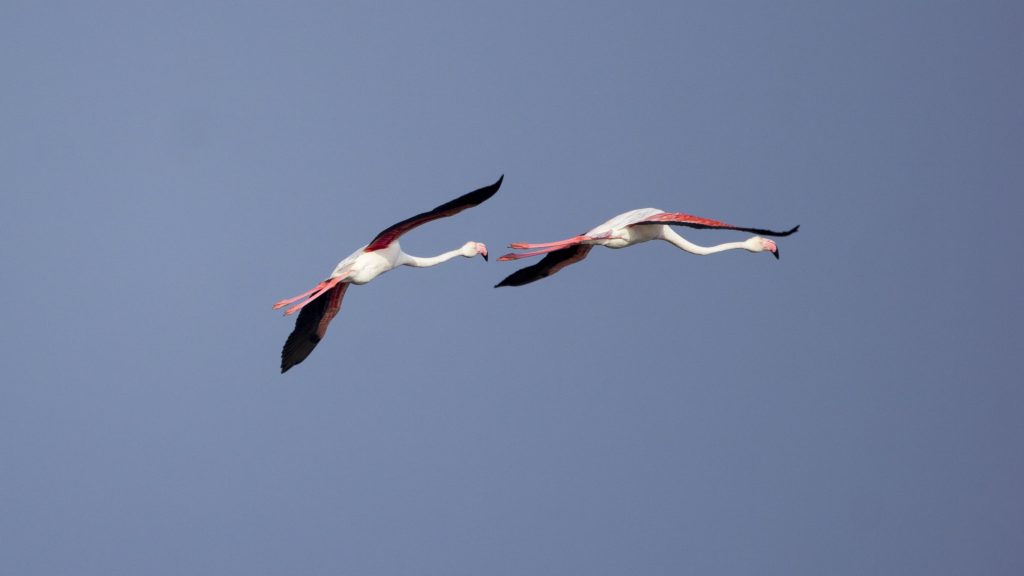
Enjoying the silence
He explained about the nets used in fishing – the natural fibre ones vs the plastic ones. The community doesn’t like folks using the plastic ones since they can bring a large catch in one haul vs needing multiple hauls over a few days with the natural ones – what this does is also deplete the fish quicker, and that in turn forces them to go further out to fish. And the large haul will end up depressing the market price, and that impacts all the fishermen on that day, just because of the few that use the artificial nets. In fact, he said there was once when the prices went down to Rs. 20 per kg because of someone who pulled in a huge haul; but he knew that selling at that rate was a significant loss for him (just the diesel cost spent on his boat ride was more), and he dumped his catch back in the waters vs selling. The reason for the higher haul? Likely because the plastic ones are a lot thinner and maybe harder for fish to spot.
“End of February to October is the season for spotting flamingoes,” the boatman replied to Udhay.
Bala mentioned, “The flamingos come from Gujarat to here for the summer.”
“Since a lot of the shrimp catching is done closer to land, this area of the flamingos is undisturbed. Otherwise, if there is noise, they will fly away. That’s why even when we come this side, we speak in a soft tone.”
After quite a while, we decided to move, but after starting the motor, Udhay asked, “Can we stay here for a little more time?”
We were all ok and so was the boatman.
“Shall I anchor it here or just leave it?”
“You can leave it.”
We enjoyed the silence of the sea. With the elections just having concluded, it was natural for the topic of politics to come up. How people he knew were upset with some schemes that were withdrawn or modified by the prior government, which negatively impacted women in their communities. We hadn’t heard of this in the city, but it was an interesting observation. It also seemed like perhaps there was more done in the city vs these areas. The locals refer to the town as Pazhaverkadu and not Pulicat
Displaced fishermen
“We have to go in that direction for our return,” I said.
And Bala said, “No – it’s that way.”
The boatman corrected us – we were definitely lost with the direction.
“Do you know how far we’ve come from where we stopped?” he asked us.
“We moved?”
“Yes – we stopped there. About one kilometre we’ve drifted.”
None of us realised that we were even moving slowly with the waves!
“If we go one hour in that direction, we’ll reach Sriharikota,” an island belonging to Andhra Pradesh that is famous for rocket launches. Andhra Pradesh is located above Pulicat.
“From here you see land at a distance. The further we go, on all sides there will only be water.”
He narrated a story of 3 folks who went to the sea for 3 days to fish, carrying with them even a small stove so that they could cook.
“It’s riskier, but you can get more fish. Over here, if there’s a storm, then if we traveled only one hour from land to fish, we can get back home. In the sea, you have to manage dealing with the storm.” He talked about the strategy with anchoring and having to run the motor at a low speed to deal with the storm.
“Those people got stuck in a storm. And after a while they had to use the heat from the motor to cook the fish for eating. They waited in the boat for a few days. After the storm settled, they thought they would have drifted to Andhra Pradesh.”
“They got off the coast and discovered they were in Bangladesh!”
With no money in hand and having to come back all the way south, they had to sell some of their nets (these do fetch a good amount of money) and made the return trip with their boat on a truck via a couple of transfers on the way.
“When they came home, they saw that people did the last rites for them!”
It was natural for people to search nearby areas like till Andhra after the storm to see if they were seen, but no one would have imagined Bangladesh, and so people thought they had died at sea.
We often hear stories of fishermen from one country ending up in another one, and we could appreciate why these things can happen without the person even being aware. And these are very basic boats which don’t have any add-ons – no sophisticated equipment or communication lines to be able to figure out where they were.
“Miracle that they survived and back it back.”
Don’t sleep
The boatman suddenly said, “Look there.”
There were about 10 flamingos or so flying in formation and passing near us. Bala mentioned that you should never put away the camera till the end, since you never know when an opportunity might arise – but he had gone against his own advice and put it in his backpack a little earlier! He quickly pulled out the camera, attached the lens, and managed to snap pics of them.
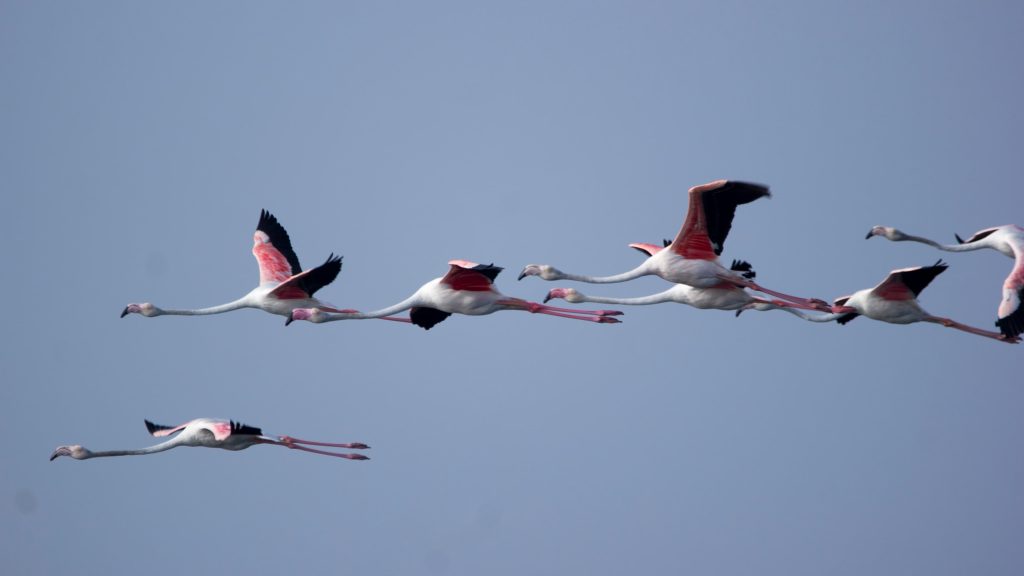
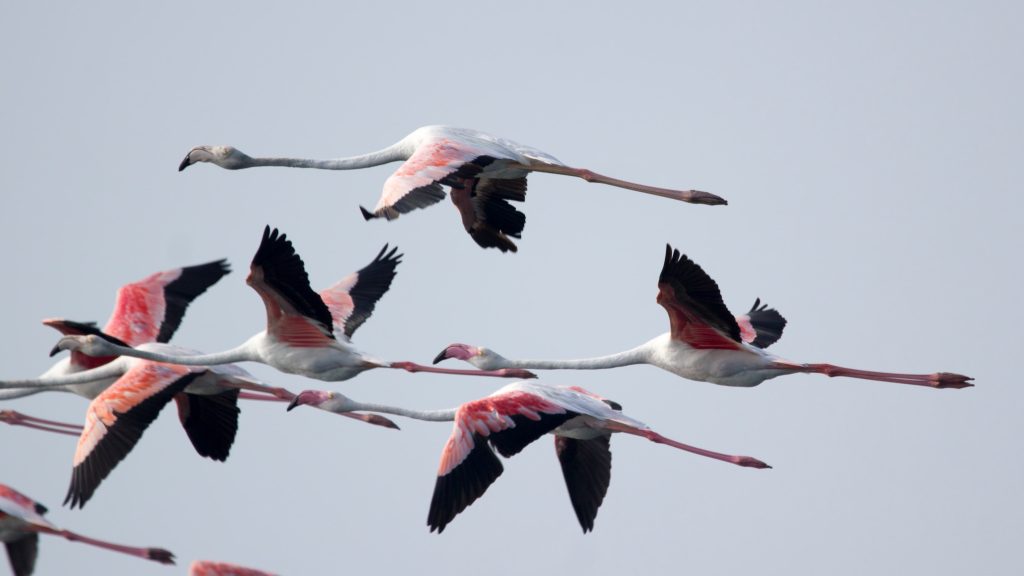
On the return, I realised what the white buoys were. The buoy was attached to a rope, which was attached to a fishing net where fish got trapped. The fishermen would take out the catch, and then toss back the buoy with the empty net back into the water – periodically, they went around checking the nets.
The boatman said, “We had a few youth partying, celebrating, and creating a lot of noise recently. Some of them were high, and one person fell into the water. Unfortunately, the propeller struck his head, and he died instantly.”
This wasn’t a news item that cropped up when searching about Pulicat lake; so potentially there have been others which weren’t reported widely. The topic of death led Udhay to ask about the 22 people tragedy.
“It wasn’t a fisherman who drove the boat that day, but instead a person who used to unload fish from the boat,” and then he went on to explain some of the mistakes that happened. And the sad tragedy of having to carry a 3-year-old kid’s corpse.
Remembering the incident, I tried to stay awake on the return drive. But I still dozed off very briefly a few times. The clouds had parted, and the sun was blazing down on us for about 30 minutes. In an hour, we were back where we started.
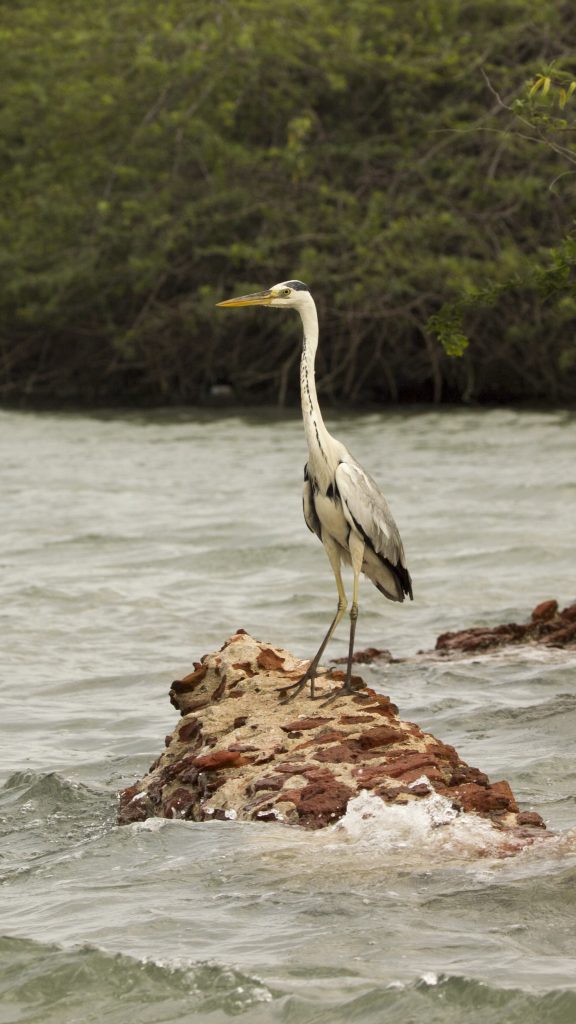
Some of the other birds that we spotted as per Bala – terns, pelicans, egrets and cormorants.
This is an area that could have been developed into a proper tourism spot with controls to ensure the birds aren’t disturbed, enforcing safety requirements, facilities like restrooms that tourists would need, but the boatman said that some 3 departments were fighting it out regarding who was responsible for the lake. So is boating banned? Not really sure – there were some old news articles that said there are boards saying it is banned, but we didn’t spot any.
If you like going out to the middle of the sea and enjoying the silence, you’ll definitely love this boat ride. It’s not the typical short ones we see in many places in India.
Added to it, if you have a local boatman, it’s interesting to hear about their life stories; stories from the fishing community that many of us would never know about. We discussed details of fishes, how the fisherman get paid a tiny fraction of the price the fish sells for in Chennai, families living around the lake, how they manage during the off-season, environment, how the communities need to stand together so that they can all get benefits vs independent folks going against the others, how other groups who weren’t fishermen also started to enter the business, that there is an official registration for boats, how they got covered during the year-end hurricanes for damage and how the community pooled in the money they got and redistributed it among the families to ensure everyone got something etc.
If you do plan to go, some pointers:
– Book the boat at least a day earlier after doing some research; do insist on life jackets. From Chennai, this is a nice half day trip (if you do lunch over there, it will become a nearly full day trip)
– Based on your interest, customize the schedule when booking with the operator – there are a few things which you can mix: boating, bird watching, camping, seafood lunch.
– It helps if you carry a pair of binoculars on these trips if interested in wildlife – there’s a lot that you can spot with clarity.
– Carry some food and water on the boat (especially if you are doing the long ride)
– The restroom we used was in the boatman’s home – no restrooms on the boat.
– Early in the morning is better; you don’t want to be out there in the middle of the heat.
(All pics are thanks to Bala)