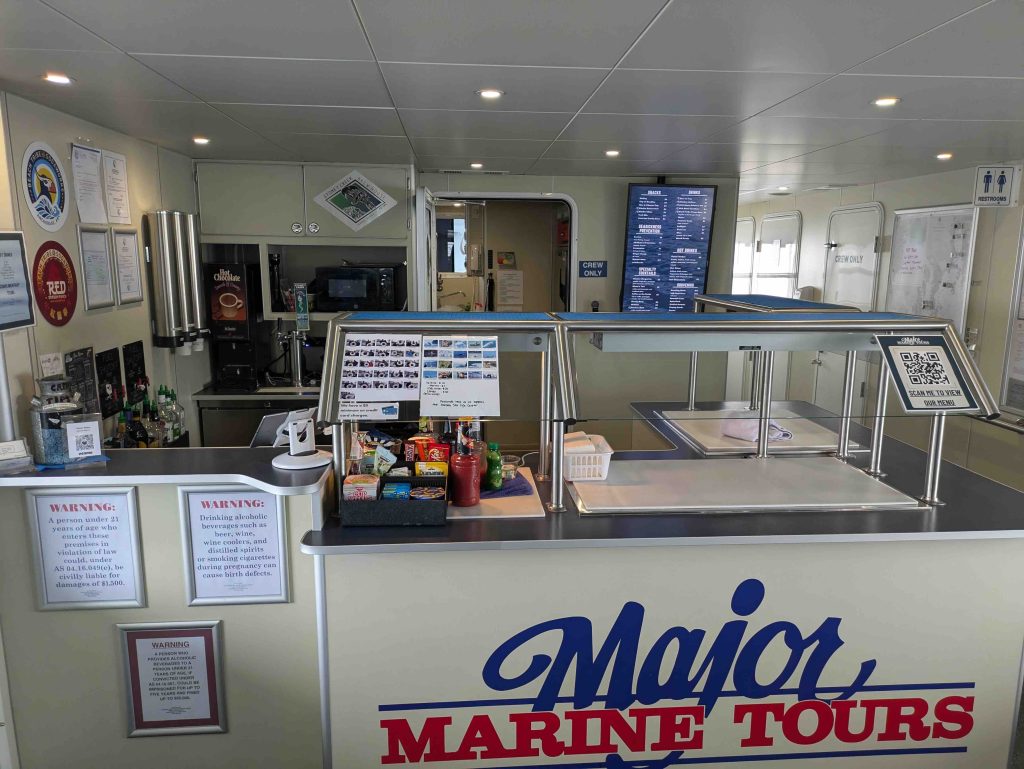
At 10:30, the captain announced, “It is time for lunch. As your table numbers are called, pick up your food from the counter.”
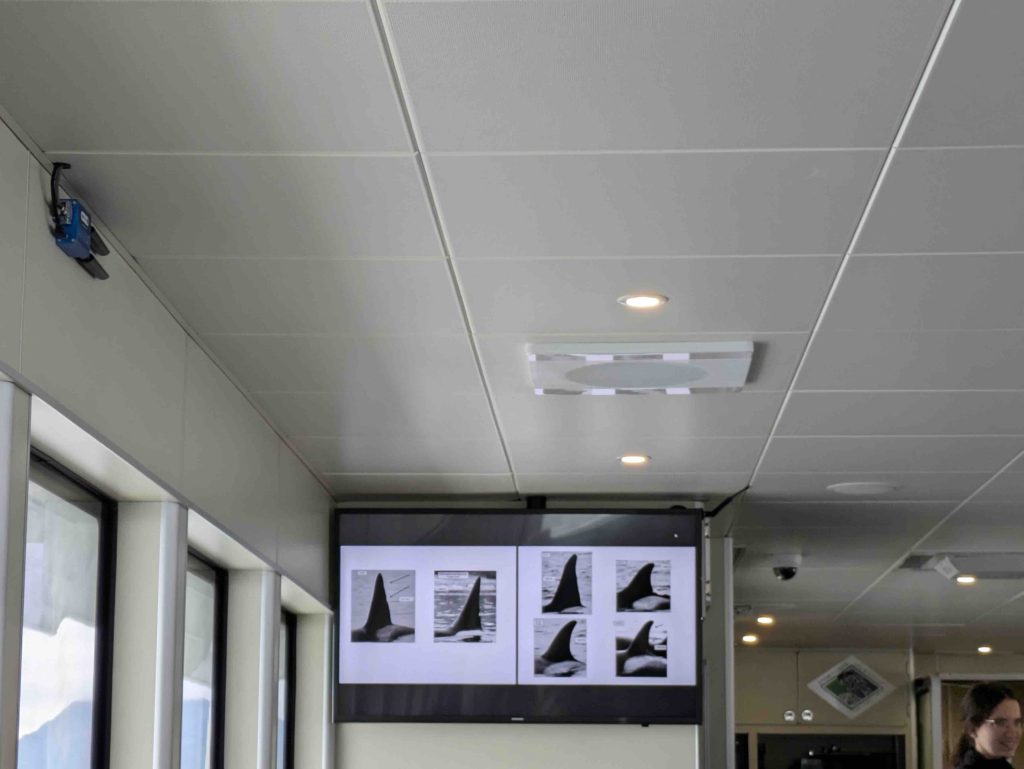
On the TV screens inside the deck, images of the whale fins were being displayed – I think that’s what the staff had clicked.
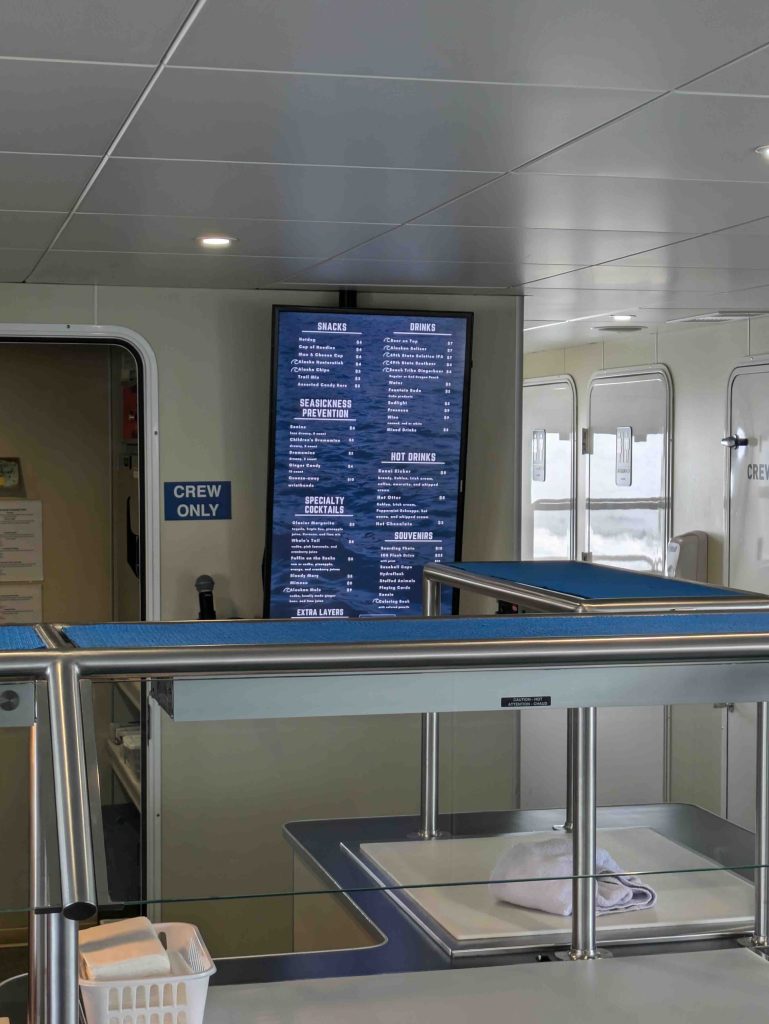
For the vegetarian option of the meal, you had to mention that when you did the booking – else they had turkey burgers or hamburgers. Lunch was simple – a sandwich, chips, a cookie and a drink.
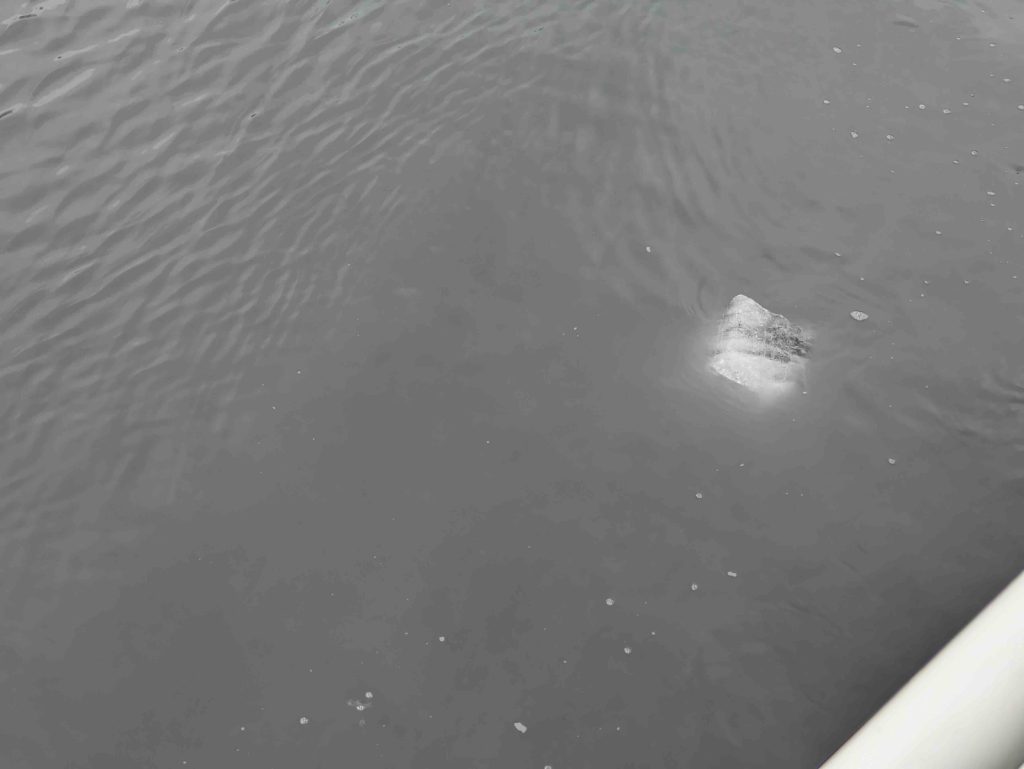
I didn’t spend much time inside; I headed back up to enjoy the outdoors. It was a bit breezy and chilly, but it was fun watching the ocean. I noticed the staff on the lower deck gathered at the rear. They had a long pole with a fishing net, using it to catch some blocks of ice floating near the boat. Those blocks must have come from the glaciers.
At the halfway mark (almost 3 hours into the trip at 11 am), the captain announced, “Welcome to Holgate Glacier. This is the only glacier here that is advancing rather than receding. It is 5 miles long and about 700 meters tall. The glacier is a moving river of ice. There is about 2 to 3 feet of ice coming down every day.”
He went on to explain why glacial ice appears blue: the dense ice absorbs all other colours except blue.
The Holgate glacier is one of the many glaciers that flow from the Harding Icefield (the place we visited yesterday).
The captain stopped the boat for about 15 minutes near the glacier. It was like a mountain made of ice, in blue and white. Beside the glacier, you could see normal mountains in brown and green. Though we were at a distance, we could sense how much ice must’ve been packed into the glacier. We took snaps with the glacier in the backdrop.
One of the lady staff came up holding a block of ice. “Does anyone want to touch a piece of the glacier?”
We were the first group to volunteer. Raghav took it in his hands and passed it along – none of us had gloves, and so it was a challenge holding it while posing for a snap!
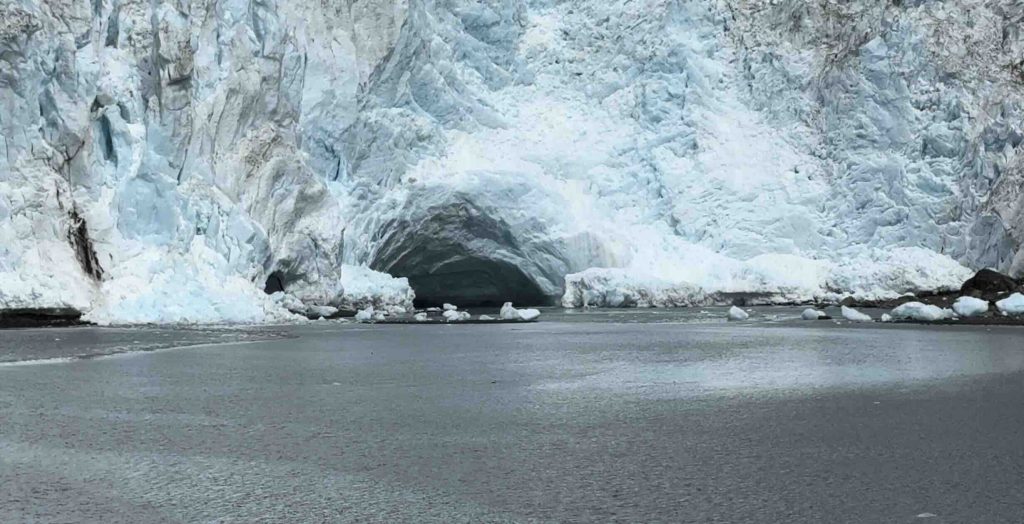
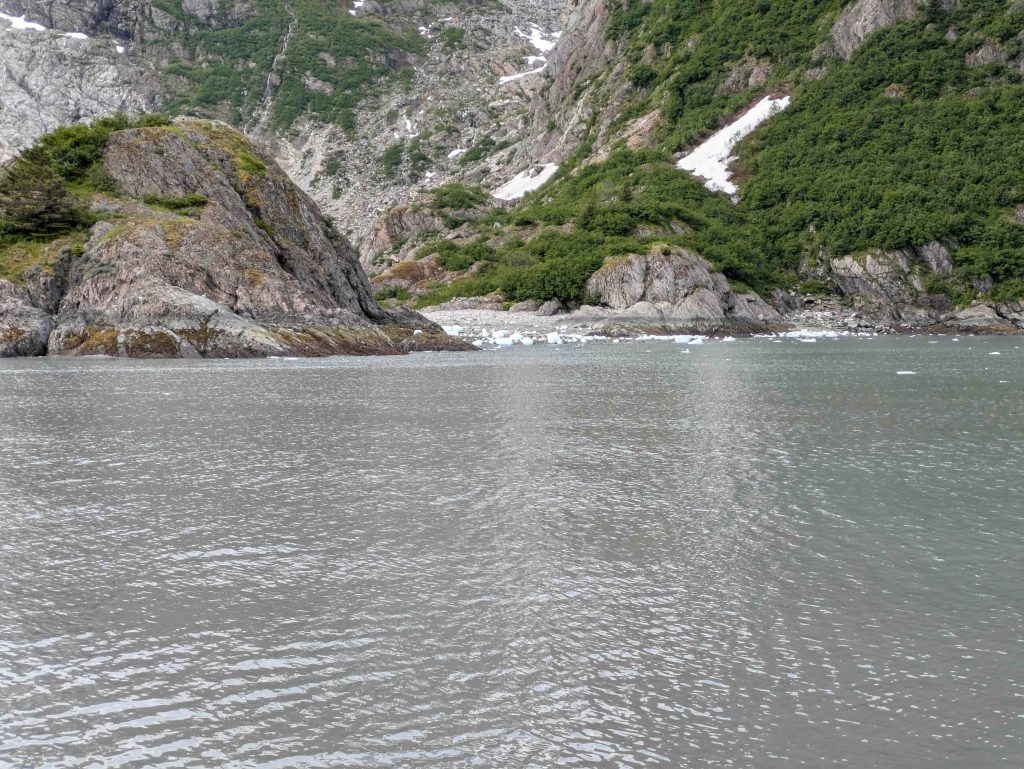
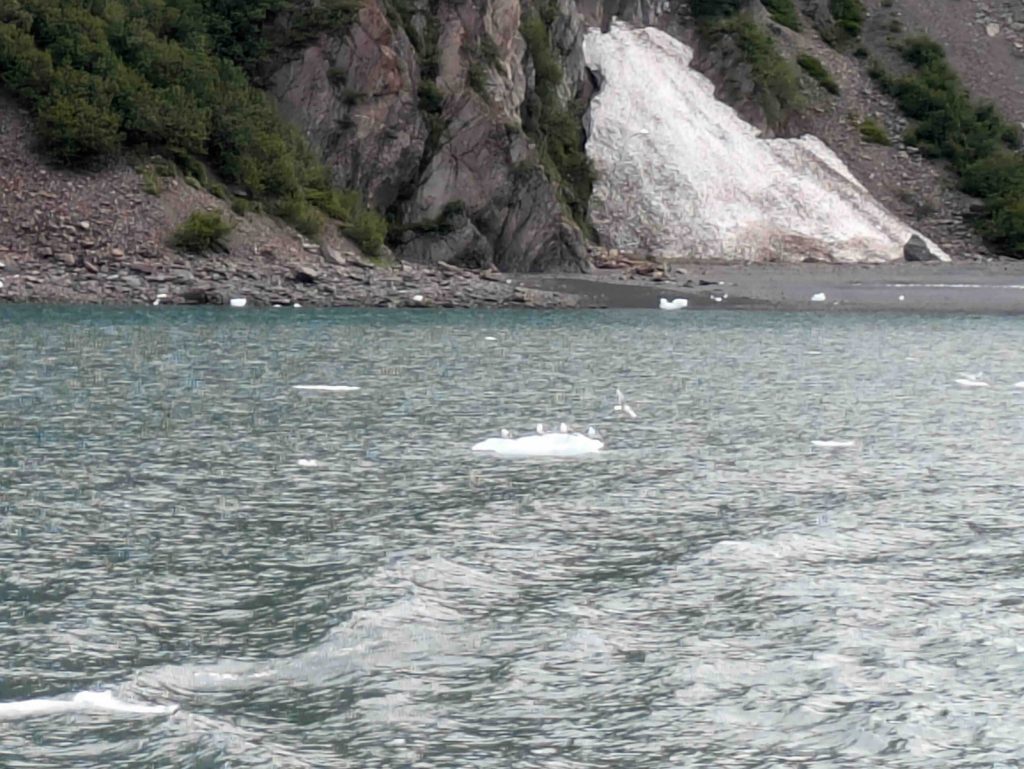
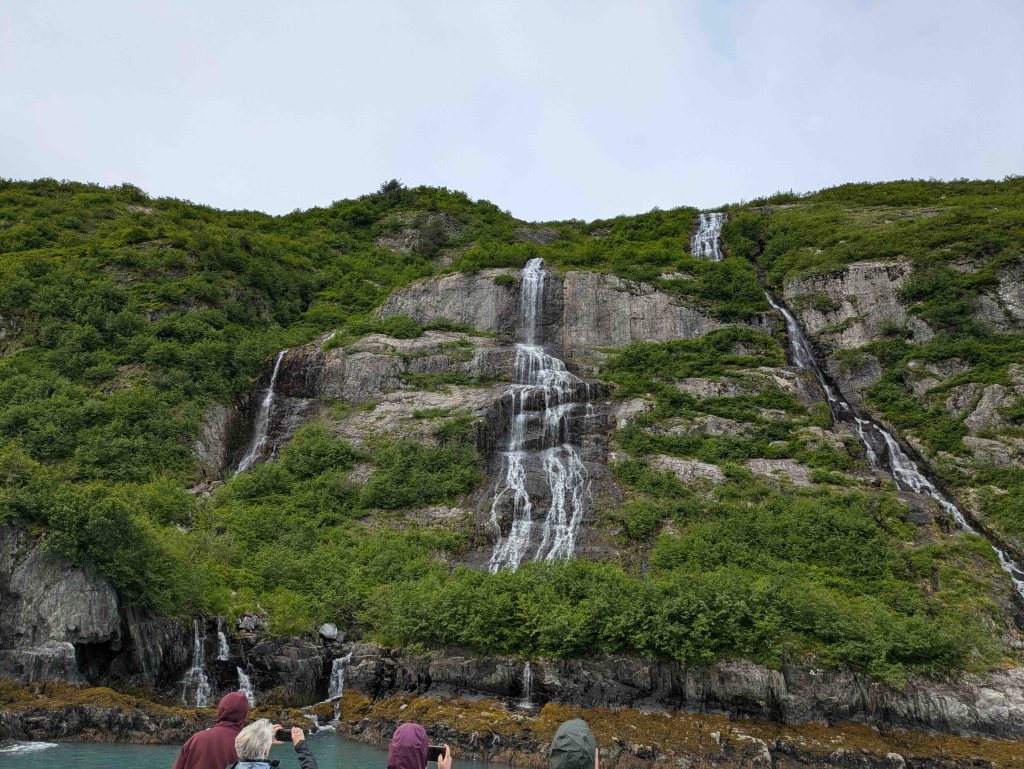
Moorthy was filming the scenery, and as we admired the view, we saw a small section of the glacier break off and fall into the ocean. That is what is called ‘glacier calving’. What breaks off is an iceberg if it is fairly large.
The cruise boat turned around for the return leg but took a parallel route to the first leg so that we got to see different areas. All of us sat in the upper deck seats, enjoying the view. The top deck is open with a roof, but on the front side of the boat, there is a little bit of protective glass – so if you sit in the two seats in the center of the four-seater bench, those are behind the glass, and you are shielded from the cold breeze; it is a great spot for viewing.
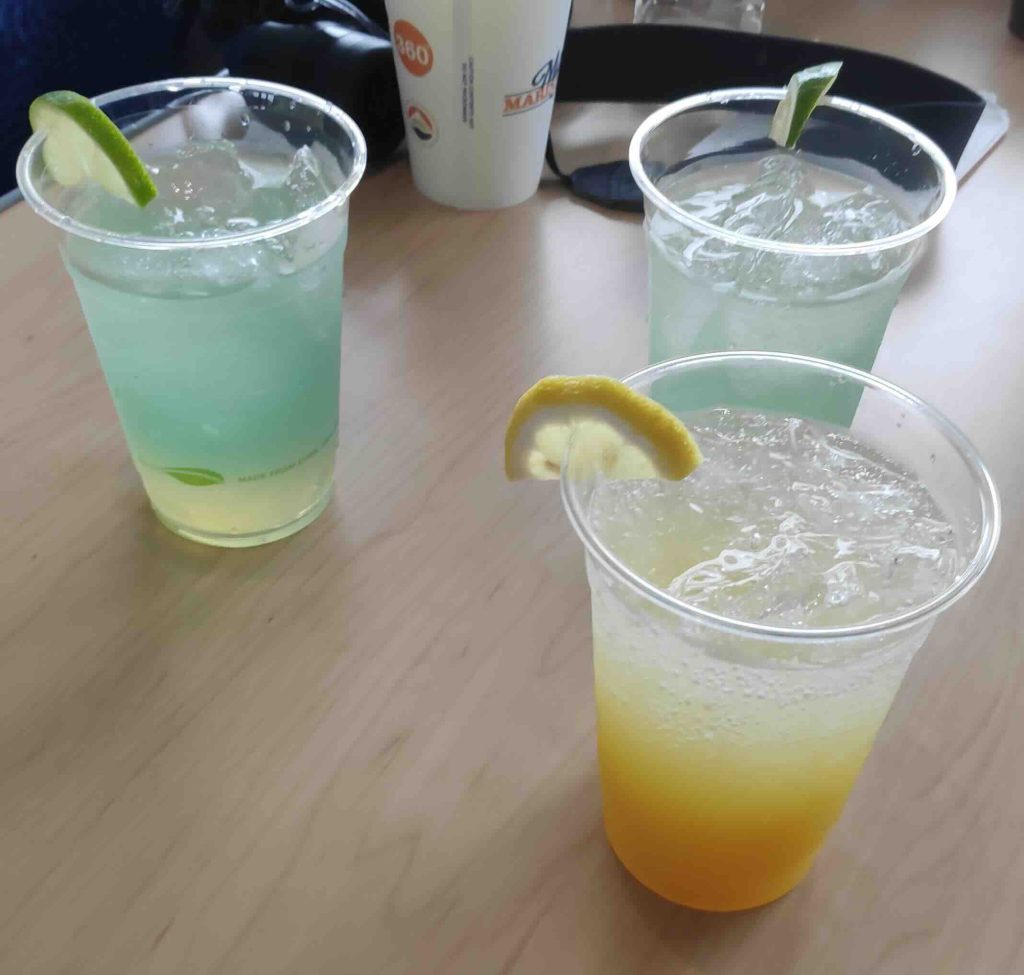
Around 11:30 am, we heard the captain say, “If you’d like to taste the glacier, our staff has prepared a special glacier margarita using the glacier ice. Buy a glass of this unique drink from our pantry.”
“Let’s go and try it out,” Moorthy said.
I didn’t feel like having a cold drink in this cold, so I told them to carry on. I joined them later for a sip from the 3 glasses they bought. It was expensive – glacier ice is ice, and so, don’t expect some unique flavour from the ice!
The captain on the return leg took us through some islands; this part of the cruise was to spot birds in the area. “We will stop near the Chiswell islands to give you some time to spot birds in the area.”
This is a bunch of small islands. You’d think of beaches on islands, but these were more like rock formations that have popped out of the ocean – so there’s no sandy beach but rocky terrain with trees at the top. These are not inhabited by humans, and wildlife thrives here – plenty of birds nest on them.
There were large groups of the ‘common murre’ that blended in the background of the rocks – with a white belly and black head and wings, it reminded me of penguins, but it isn’t related to penguins.
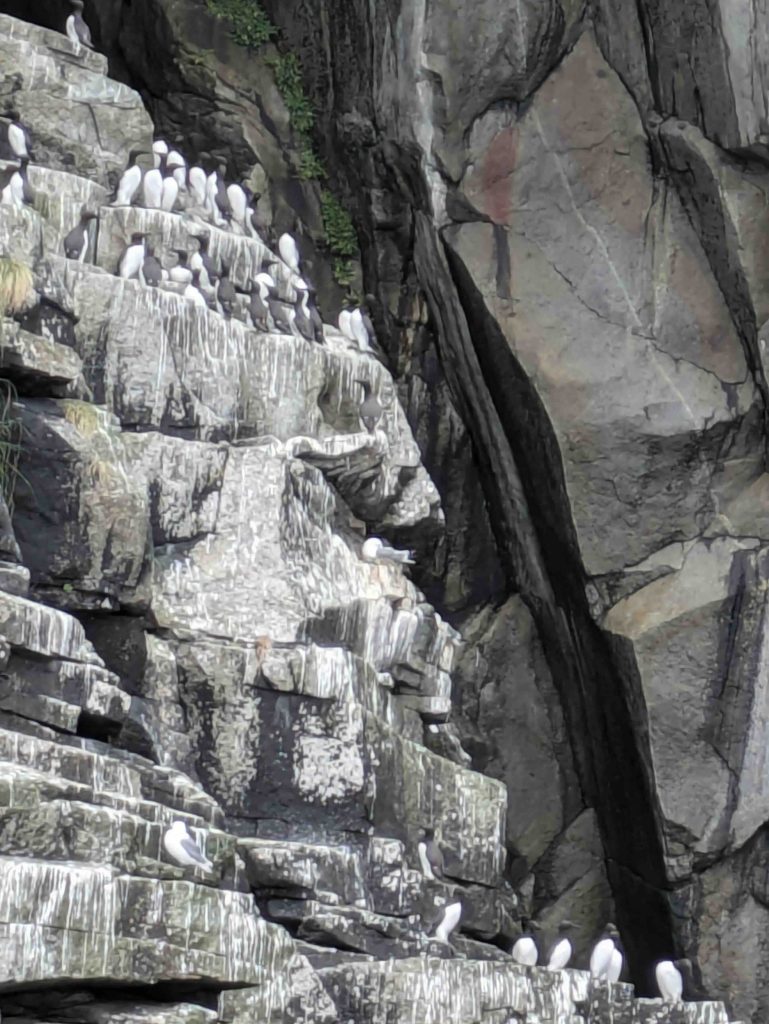
“These birds can dive around 500 feet into the water.”
We could see this large group standing across the steep cliff – they seemed to feel at home at such a height!
“They lay their eggs on a rock, which is odd because if you lay an oval egg on those rocks, they will mostly roll down the cliff. But their egg rolls in a circle rather than rolling off a cliff. In my opinion, that is one of the greatest animal adaptations on the planet – the ability to lay pear-shaped eggs so they don’t have to make a nest and can lay an egg wherever they want to.”
The term for the pear shape is ‘pyriform’ – one end is pointed, and it’s not easy to roll off. Looking at the edge of the cliff where these birds seemed to be enjoying and probably living most of their time, it made sense.
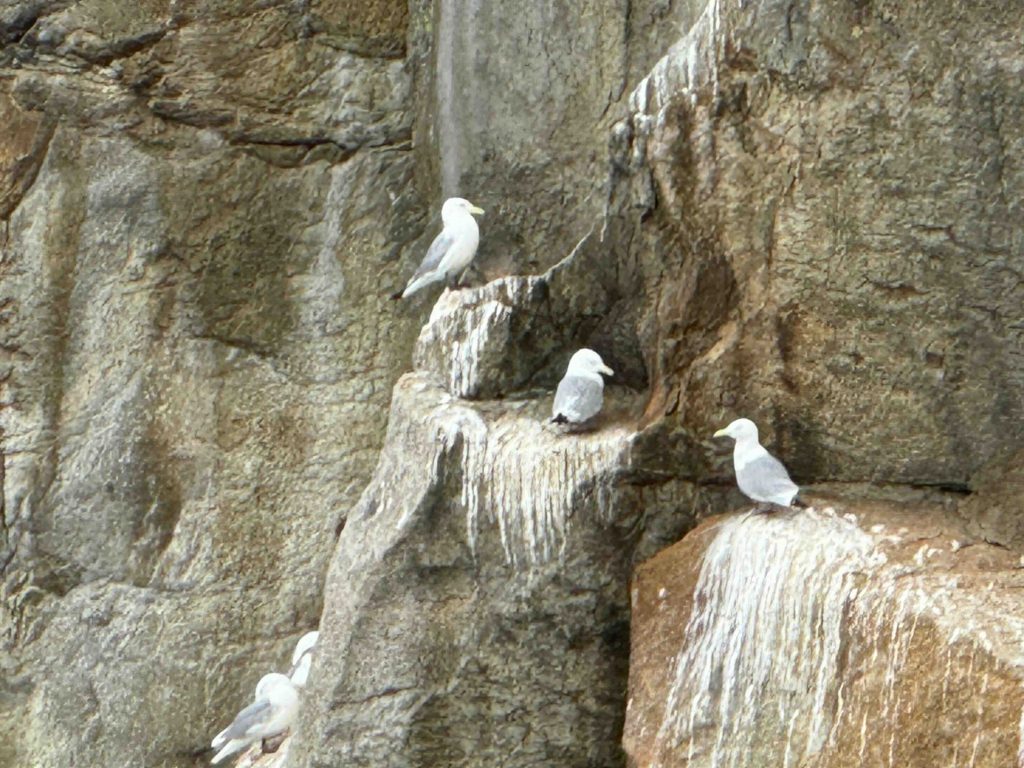
We also saw plenty of the black-legged kittiwake – they were quietly sitting on the edge of the rocks and were easy to miss unless you zoomed in on the rocks.
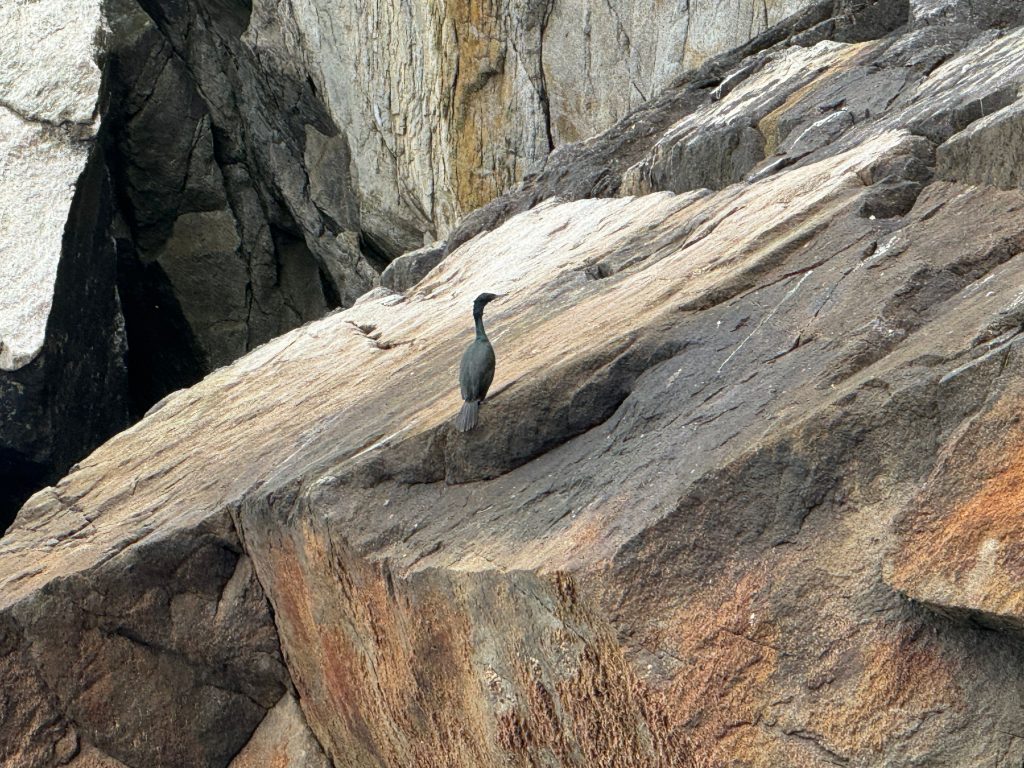
Moorthy spotted a solitary ‘coromorant’ – a bird with a long body fully in black. He also captured a nice snap of an American Robin – a distinct orange-red colour belly – this bird wasn’t even on the list of birds on the pamphlet!
When the captain announced that we could see puffins in the water, there was visible excitement among many passengers. Since these were moving, I couldn’t capture any proper shots of them – and it took me a while to figure out what a puffin was!
https://www.alaskasealife.org/aslc_resident_species/26
The birds with an orange-coloured beak. We saw some floating on the water, and some were there on the rocks.
At 12:30, we heard the captain’s voice, “And over there on our right, we can see an endangered species – the stellar sea lion. Since they are endangered, there is extra monitoring in place for them. In fact, you can see some of the folks from the Alaska Sea Life Centre watching these animals from above with their monitoring equipment.”
I couldn’t spot any humans out there, but Moorthy had his camera focused on them. “There.” Three men were sitting on rocks directly above the sea lions – the sea lions didn’t seem bothered by their presence.
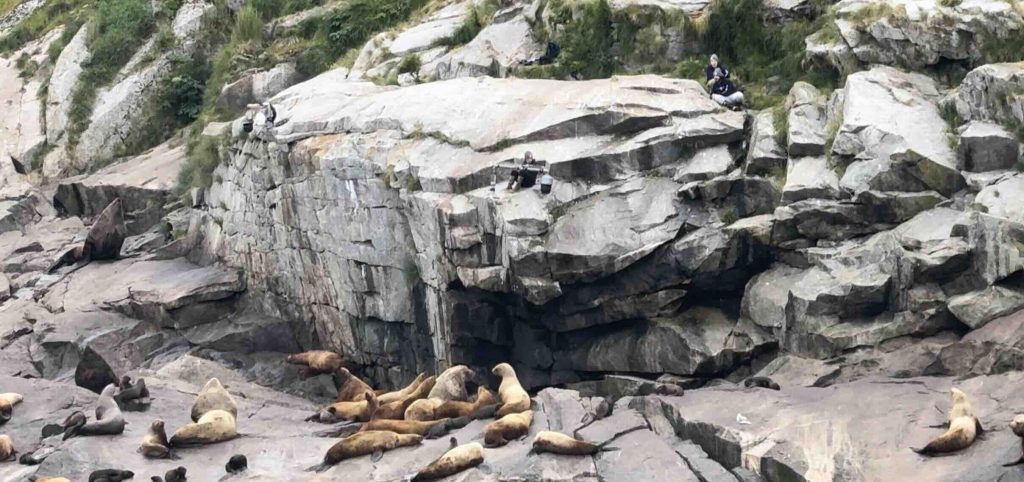
“Disease, predators and excessive fishing led to their decline. They are different from harbour seals – males fight for territory and even fight to the death because territory helps them in mating. This place in Chiswell islands is a pupping ground – you can see many new pups here.”
“The sea lions are branded – it is a cold branding that is done, which is painless. The letter e is for Chiswell Island, which marks their birthplace.”
Branding them was part of the conservatory effort to help monitor them.